Constructivist General Guidelines
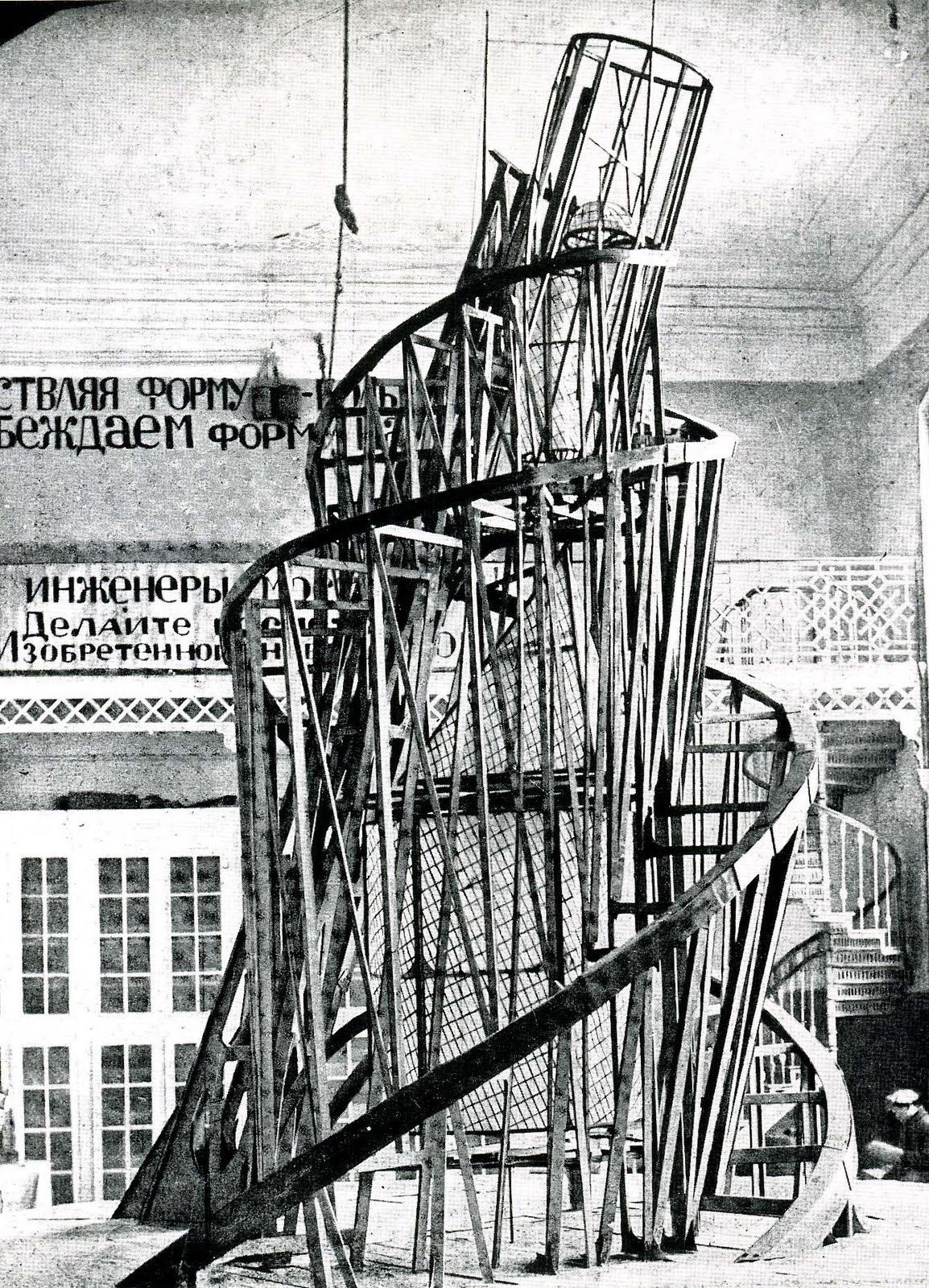
The Constructivist Project is intended to teach about artists and their works. It is also about using industrial, planar materials to create sculptures that present volume through plane, line, shadow, light, and negative space. The works are to be in-the-round, either free standing, mounted, or wall hung. The piece can have a front side to it, but it must have interest and volume on all visible sides. In every case, they must be three dimensional not flat.
Subject matter can be either human, insect, animal, or plant. In other words it must reference living form. Height should be about 6 to 20 inches. If you are to work from a person or animal, the piece should be either actual size or enlarged. Insect pieces must be enlarged. Work in a rapid, collage-like manner freely changing your mind as you go. Neatness is not the goal. You may work from memory, life, or from a photograph.
You are to make a minimum of two paper mock-ups before beginning your final piece.
- Construction and connection methods must be explored early on as part of the aesthetic.
- The size of the work must be close-to or larger than life for the living reference, and no smaller than 24-36" tall for the mechanistic reference.
- Your sculptures may be a human bust, a truncated body, or a whole person. Or it may be an animal, insect, or plant. In other words, inspired by living form. Stylistic influences naturally come from Constructivism, but references can either be original, or come from non-Constructivist artists who work figuratively.
- You must consider how the piece will be presented. It can be either be free standing, mounted on a base, or hung from a wall.
- You may be required to provide materials.
- The final pieces can contain mechanical attachments such as rivets, screws, bolts, etc. These attachment methods are an aesthetic component that must have intentionality.
- Aluminum pieces cannot be put together with adhesives and glues.
- Finishes are to be discussed with the instructor, which may include painting, staining, distressing, or leaving the material raw. This process must reflect the aesthetic quality of the piece, as do the forms and connection methods.
