Abstract Metal Form Project Introduction

This project is intended to develop your hand and simple tool skills while also expanding your abstract visual acuity. You are to work almost entirely with sheet metal, either found or raw. The sculptural piece you create is not meant to look like or represent anything other than itself. It is not supposed to represent a person, an animal, a tree, or any other recognizable object. It is non-objective. It may be geometric or organic, where organic does not mean representational; it means non-geometric.
Subject Matter

Non-Objective art means that it is an abstract form that is derived from the process of creating it rather than the strict compositional constructs normally attributed to creating a work of art. It was first described by the Constructivist artist Alexander Rodchenko of the early 20th century Russian avant garde, who was working on a series of paintings which contained simple overlapping black circles and other forms.
Scale
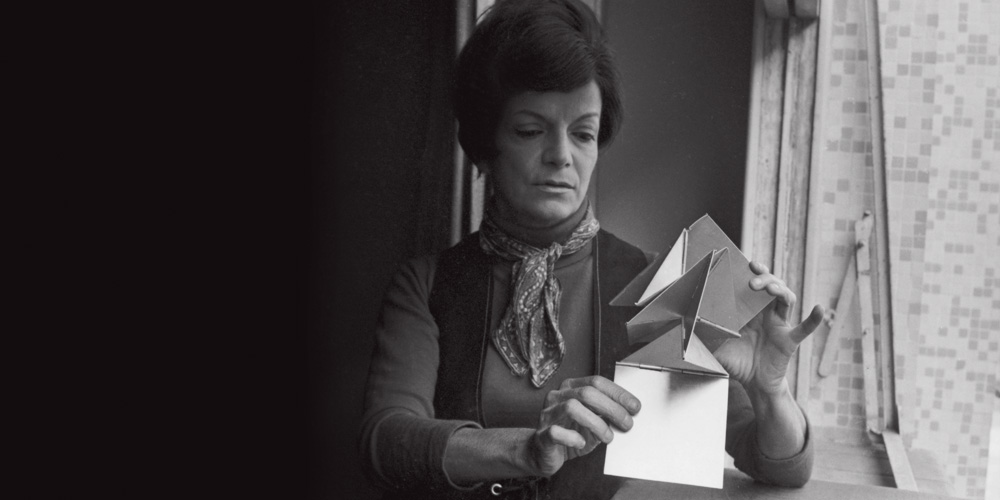
Although the work you are to create is made from sheet metal, it is meant to be essentially in the round if presented on a stand, and relief if hung on a wall. Either presentation method is acceptable. If it is hung on a wall, a strong, clearly defined hanging system needs to be incorporated. The dimensions can range from 10" x 10" in height and width, with a depth appropriate to its form, to 20" x 20". Any larger, and the project may take too long.
Materials and Tools
You may need to resource found and new metals on your own, if what we have on hand is not of interest, or if we do not have materials available. Our supply of metal scrap and new metal varies, as we get it nearly entirely from donations and scrounging.
- Bring your own comfortable leather gloves, or other gloves appropriate for working with sharp sheet metal.
- Wear safety glasses when working with materials and processes that have the potential to strike your eyes.
- You must wear headphones or earplugs when working with loud equipment or processes.
- We have hammers, vises, some cutting devices, and anvils for use in class on a shared basis.
- You may wish to bring your own sheet metal shears because ours are in terrible shape.
- Gather interestingly textured, painted, worn, or otherwise patinated metal to incorporate into your piece.
- Alternatively, acquire clean, new sheet metal.
- The gauge of metal that you use must be no thicker than can be manipulated with our brake and foot shear (16ga mild steel maximum). Thinner is better because it is easier to work.
- Do not use foil or other gauges such that they are too easily crushed or inadvertently altered.
- Paint of your choice can be applied either by brush or spray-painted. This paint is 100% your responsibility to acquire, and only has the requirement that it will adhere well to your material.
- Before painting, surfaces must be sanded rough, cleaned and degreased, washed and dried.
- Painting of metal can be done before or after manipulation depending on desired outcome. Consider carefully if you need to paint prior to manipulation because the paint has to be cured well before manipulation, or risk damage.
- A great source of pre-painted metals are from machines, signs, and automobile bodies.
- Painted and non-painted surfaces can be glossy or shiny, matte, or any sheen desired.
- Welding must be minimal so that assembly is quick and welds show very little.
- Mechanical fasteners can be used to affix parts, though fasteners should not distract from the aesthetics of the piece. Consider them structural parts rather than visual elements. Try to hide them as much as is practical. Fasteners include nuts and bolts, sheet metal screws, blind rivets, standard rivets, or handmade rivets.
- Only metals and paint are to be used in this project, including any fastening methods, but paint is not a requirement.
Process
You are to work entirely on the fly, so to speak. Let the work guide itself. Plan only in broad terms, and allow serendipity and happy accidents to dictate the direction you take. Do not enclose the metal into volumetric boxes or other volumetric illusions. Instead, allow the forms to curve and bend while still remaining true to their sheet qualities.
All pieces and materials in process must be stored neatly at the end of each class. All areas worked in must be cleaned daily. Any leftover acquired materials must be either recycled, removed, or donated to the classroom upon approval by the instructor or sculpture lab tech.
Study the work of John Chamberlain, Lygia Clark, Harry Balmer, and Vladimir Tatlin.
Timeline
Due on the day of finals for critique.
