Rivets

A rivet is an ancient joinery method for metals that allows two or more seperate pieces to be secured strongly and permanantly together without welding, braising, or soldering. They predate screws, nuts, and bolts, as they do not require threading. Instead, they rely on the property of metal to deform. essentially, a rivet is a metal pin that is driven through two pieces of metal, and then is deformed on both sides to form heads that secure the pieces together. Typical rivets have a pre-formed head on one end, and then the other end is formed in-place.
Rivets come in various types, and are used for affixing sheets of material together. They are available in metals such as steel, stainless steel, aluminum, and alloys of nickel and copper. Traditionally, solid rivets require hammering from one side to deform the metal into a flared end while it is supported from the back with a bucking bar. Naturally, this is time consuming and makes it impossible to rivet objects where one side is inaccessible.
Blind Rivets
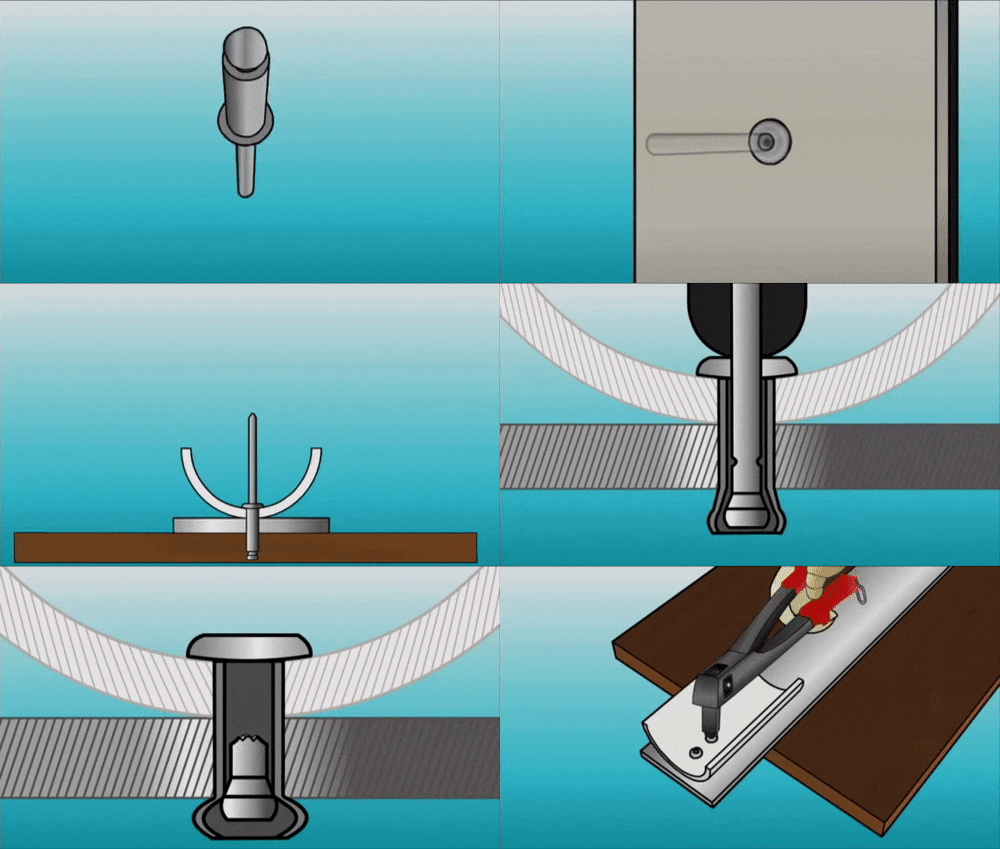
Blind Rivets are a relatively new innovation that use an internal mandrel to accomplish the riveting. The mandrel is typically a harder metal than the rivet, so an aluminum/steel blind rivet would be an aluminum rivet with a steel mandrel. Blind rivets are commonly called pop rivets, and the terms are treated interchangeably. However, "Pop Rivet" is actually a brand name, similar to how the Kleenex brand name has become the ubiquitous term for tissues.
