Colors
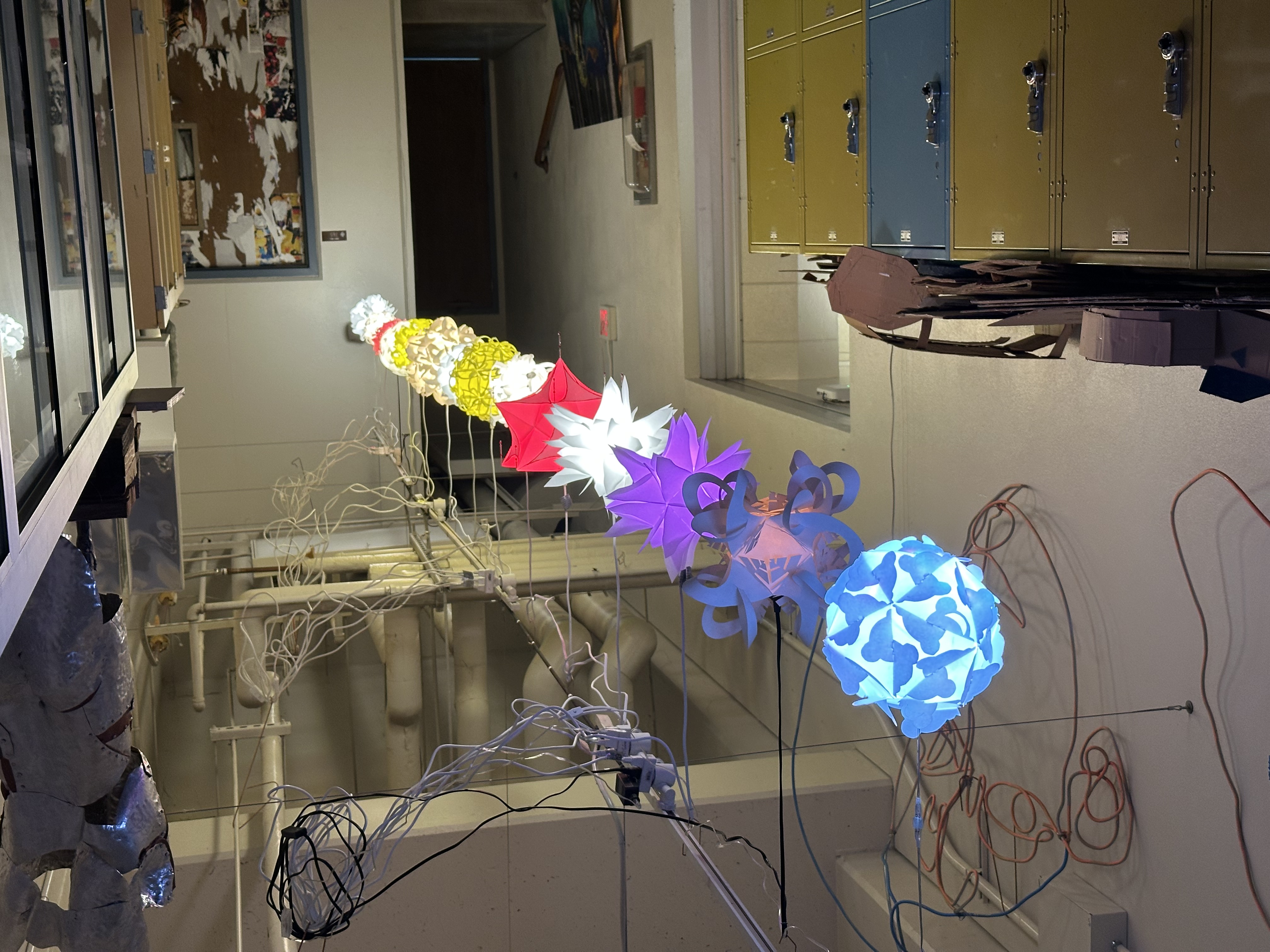
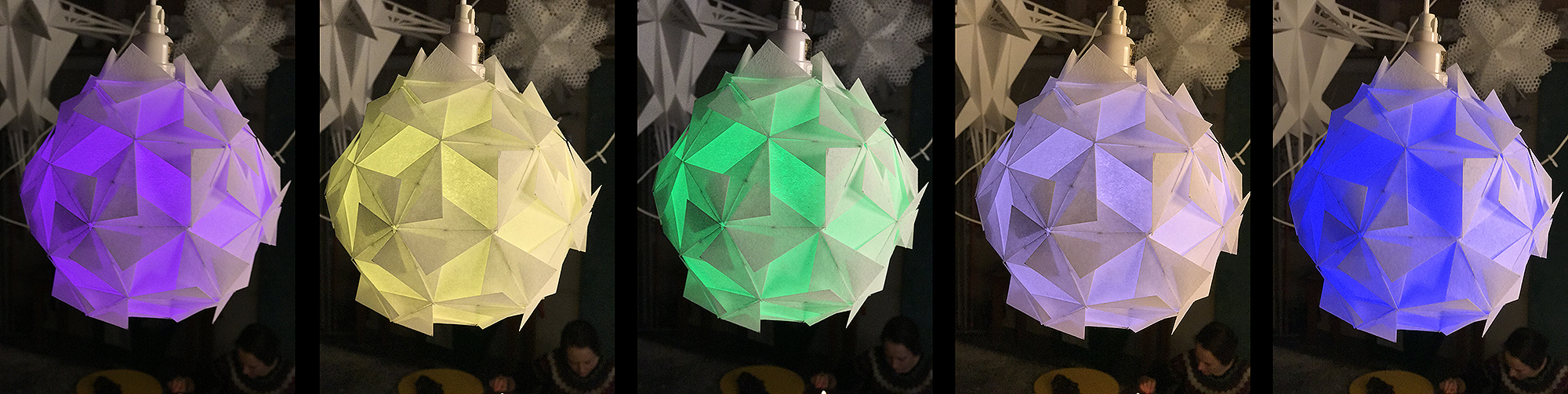
Using colored LED bulbs is an option that greatly affects the appearance of your lamp. There are many choices, including solid, fixed colors, which usually means the bulb surface is colored, rather than using tri-color LEDs. Some LEDs offer changeable color options, where the internal LEDs are red, green, and blue; the mixing of which forms the desired overall color. These kinds use either a switch on the bulb, a remote, or a phone app to adjust the color.
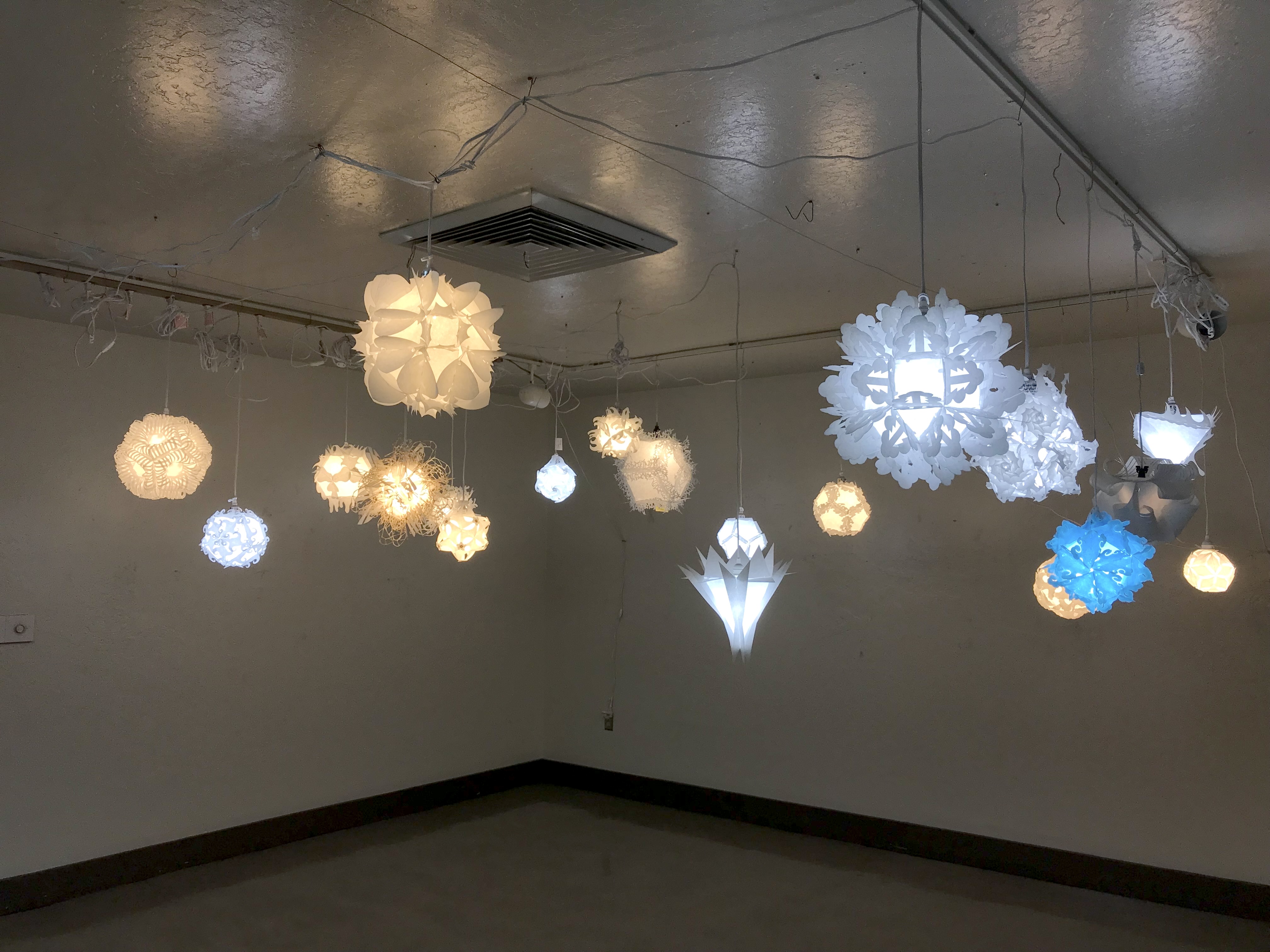
"Color Temperature" bulbs, are intended for warm to cool adjustments akin to natural light. Some people prefer warmer lighting and others cool. In general, before LEDs existed, incandencent lighting was warm (redder) because the light was produced via heat. With the advent of fluorescent lighting, cooler colors (bluer) could be produced. Fluorescent light did not rely on heat to produce light. Instead electrically charged a gas released photons. LEDs produce light in a completely different way, allowing a variety of colors to be created.
In nature, as daylight changes from dawn to dusk, light starts out as lower brightness and warm, transitions to significantly brighter and cool, and then goes back less light and warm. Our body's circadian rhythm naturally follows this color and brightness arc. Your rhythm can be altered by the color temperature of artificial light sources. Cool light tends to wake people up, and warm light can help them rest. Computer monitors and cellphone screens have the ability to adapt to appropriate color temperature and brightness conditions to help maintain your circadian rhythm.
"Color temperature" bulbs can make your lamp feel blended with household lighting if you choose to match its temperature to that of the household, whereas color changing or solid color bulbs will make your lamp stand out.
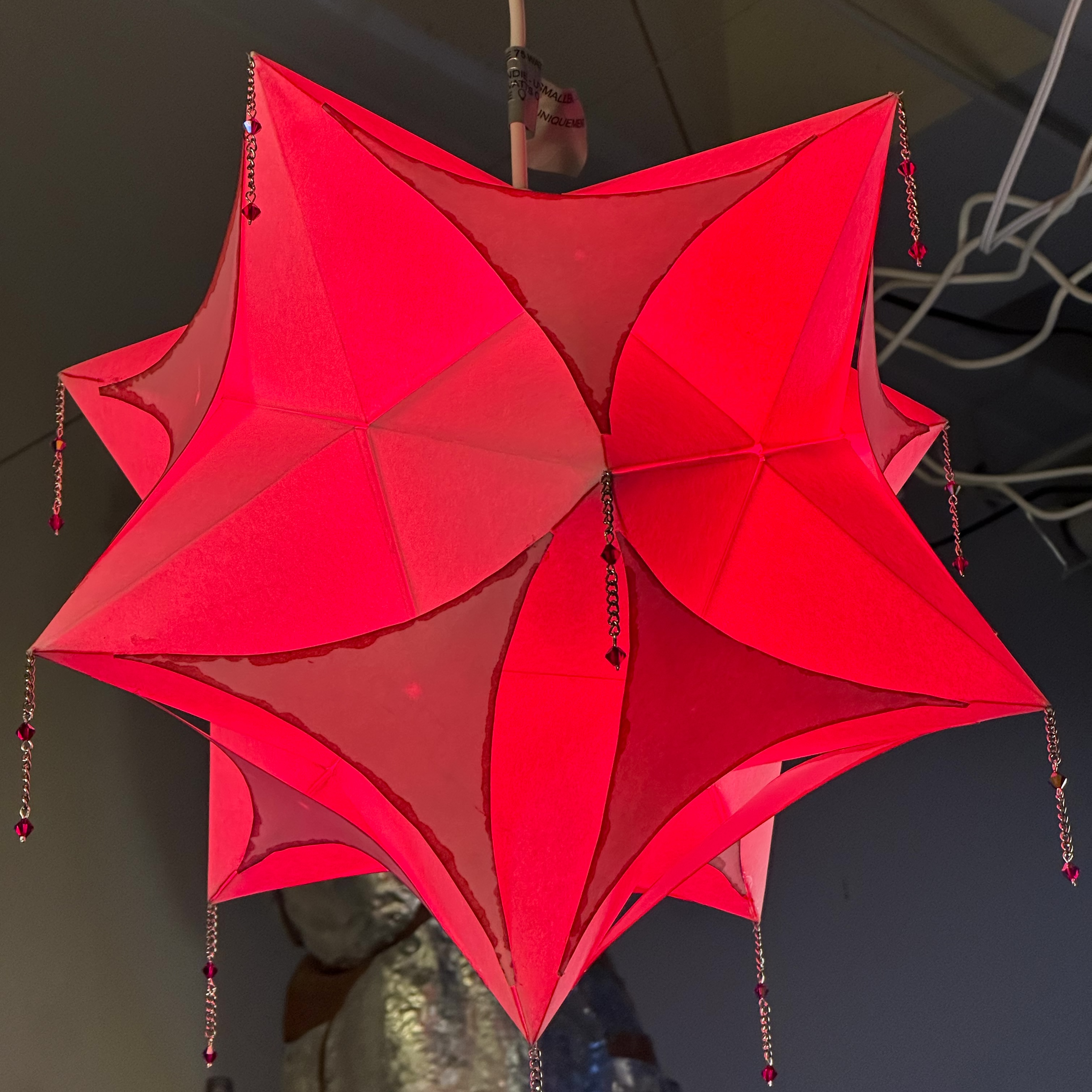
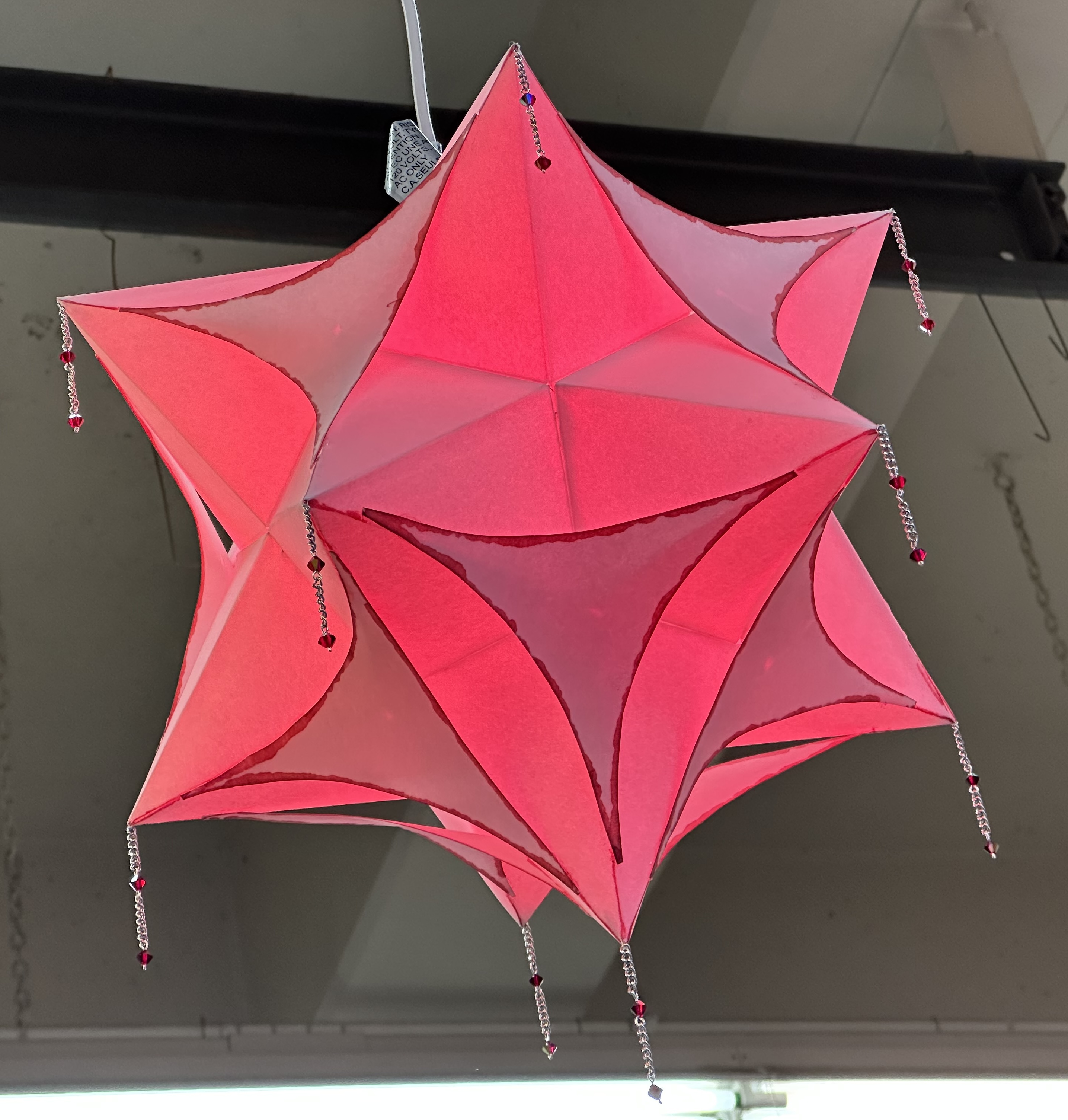
The lamp, above, was made with added skins detailed with red ink. The unintended bleeding appearance was the result of the material manufacturing process. Warlon is rice paper layered on both sides with thin vinyl. Because the vinyl is layered instead of coated as a liquid, it bonds to the surface of the paper without soaking in. The paper core is soft and absorbent, so when any liquid comes in contact with the edge of Warlon, it is drawn in through capillary action.


Another color option is to use multi-LED string lights. In the example here, the lighting was battery operated, and ran out of power fairly quickly, At one point the entire fixture dropped to the ground because the string of lights unwound out of it, as the strand was not secured to the lamp. The color spots are all concentrated at the bottom becuase that is where they accumulated. The collection of all colors creadted white as the LEDs' distances to the surfaces increased.

Color can be added by actually applying a pigment to the lamp material itself. If done well, it will produce a strong, vibrant output. It can also be applied too opaquely, which shows color when the lamp is on and in room light, but then appears black against the lamp when it is on in a dark room.
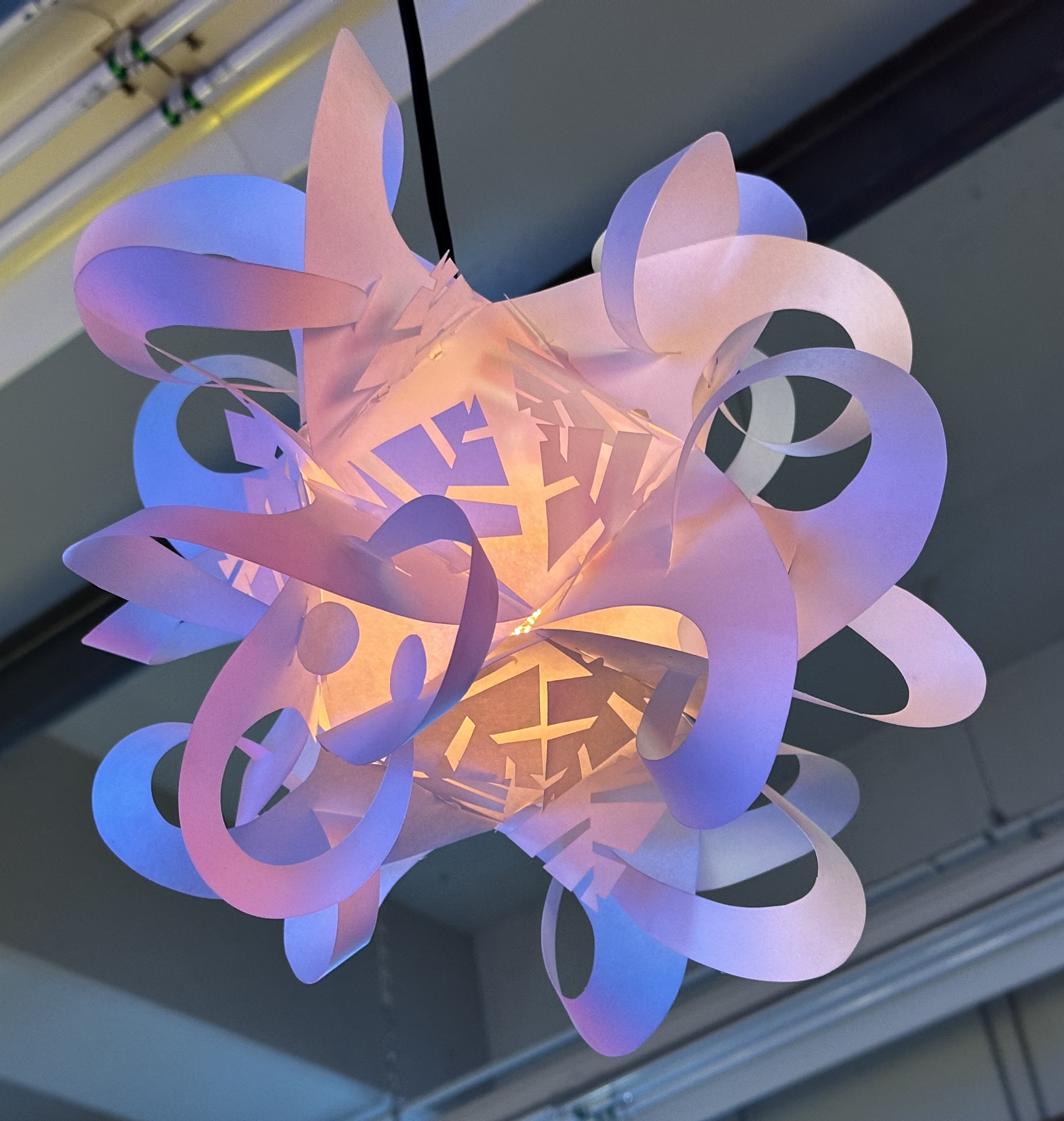
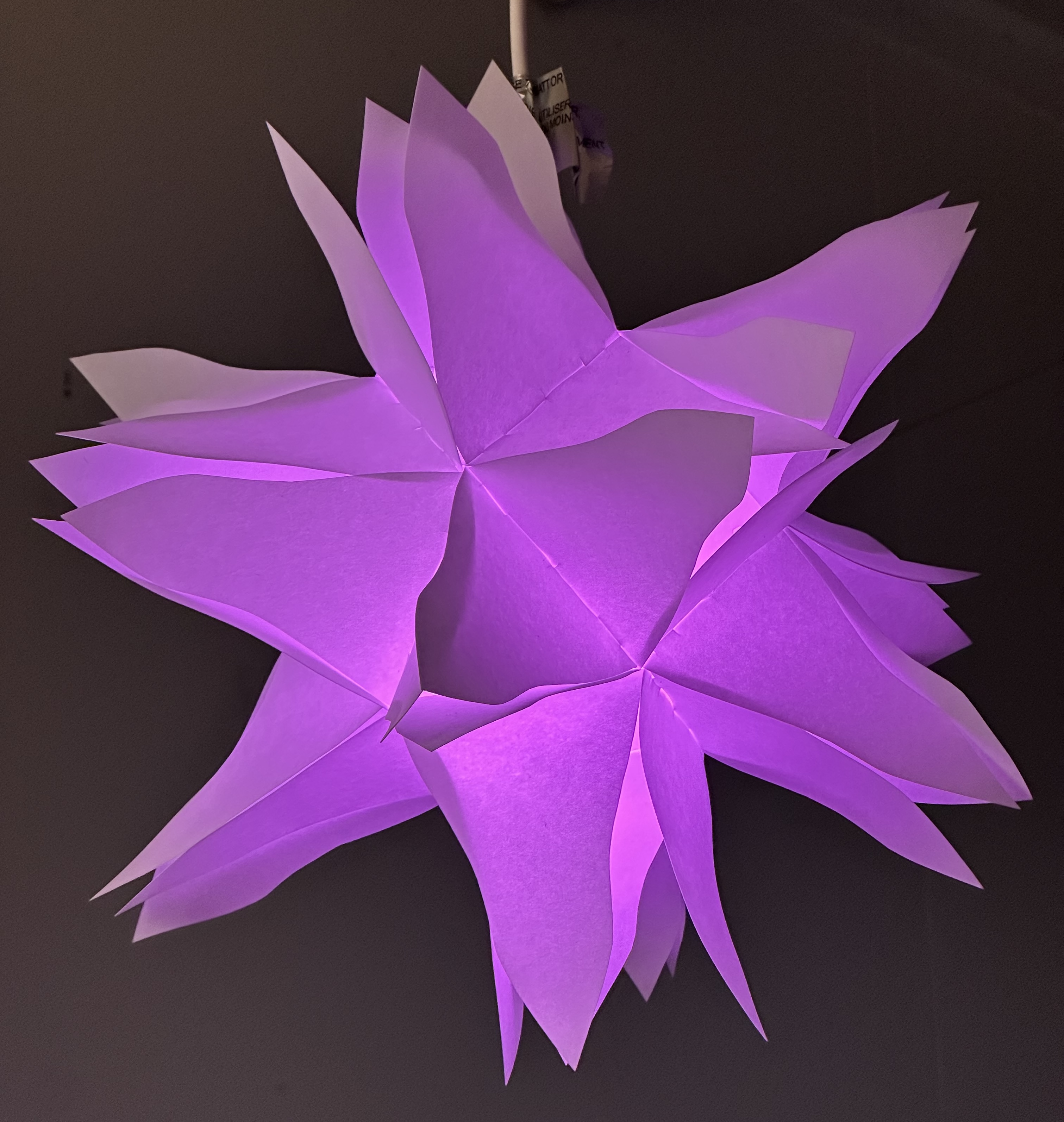
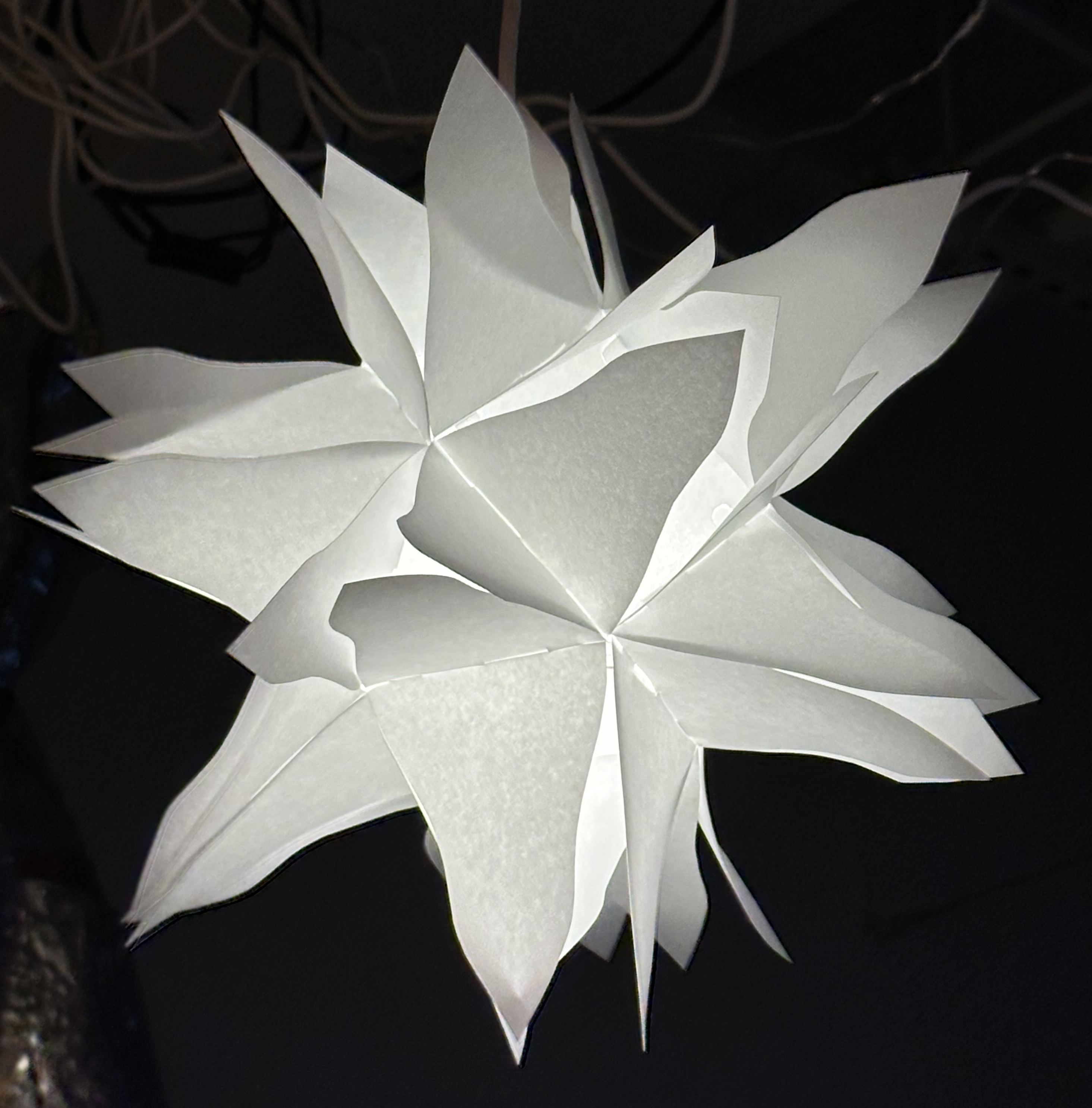
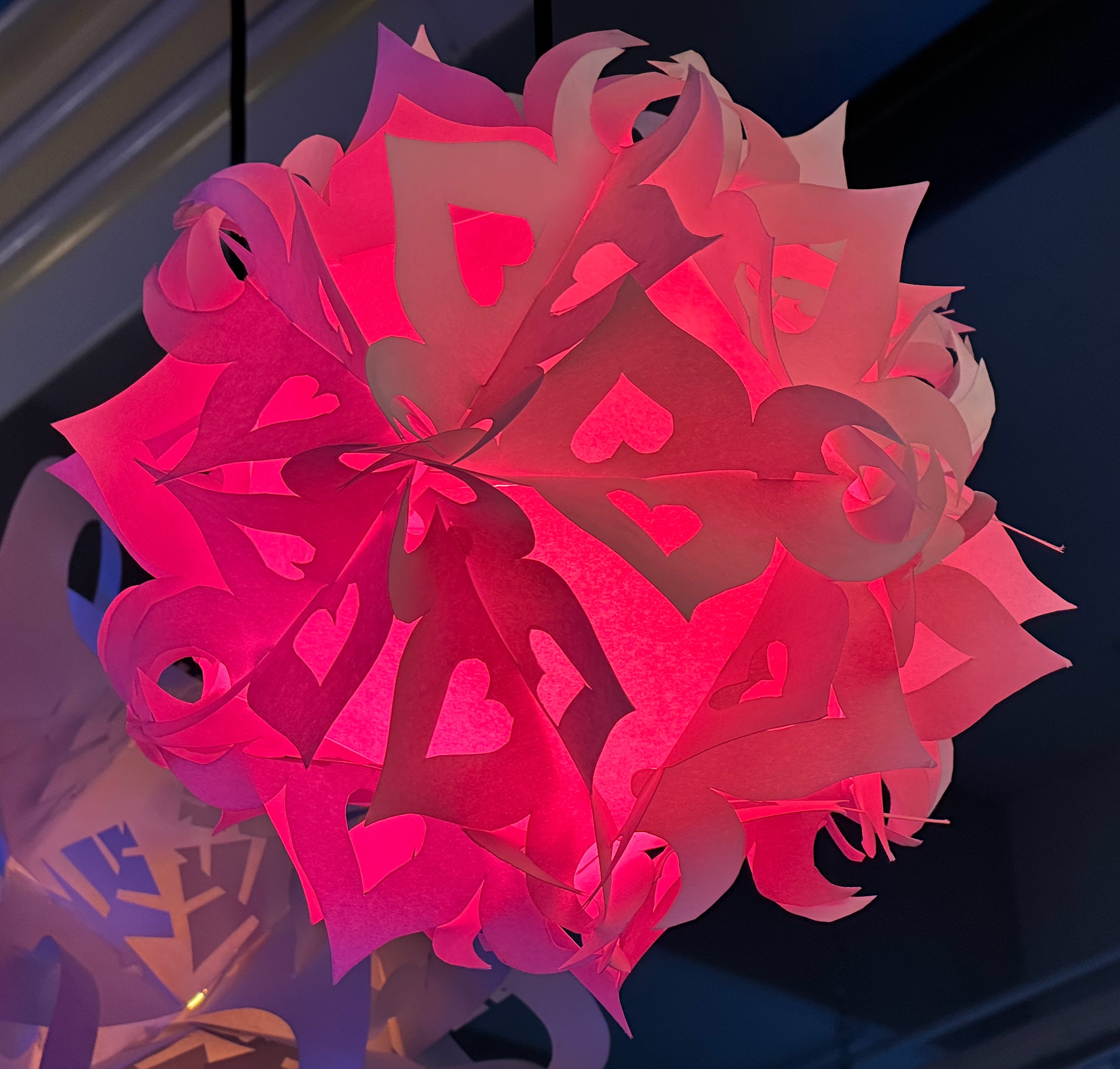
External colors, essentially projected onto the surface of the lamp, can make a very complex color mix. This is not intrinsic to the lamp itself, but the larger the extensions the more dramatic the effect can be. The core of the lamp does not have enough illumination to fully light the outer extensions, so the surrounding lighting has a large effect on it. In the above photo, the complexity of the swirling circumvolutions contributes to a gradient of color.
