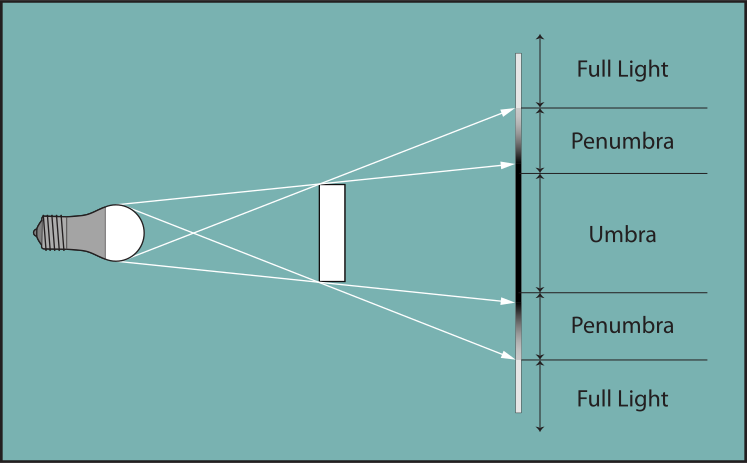
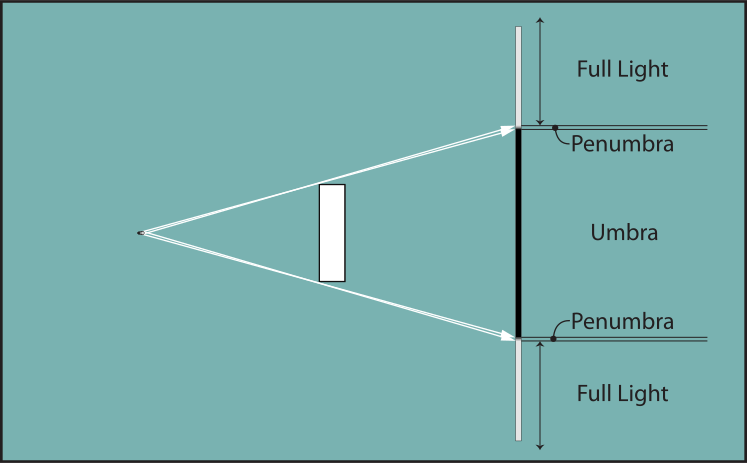
Penumbra - means partial shadow (or almost shadow)
Think of an umbrella and you will understand how it got its name. In art, understanding the nature of umbras and penumbras will help you see the world in a more nuanced and understandable way. For the Lamp Project, it will help you control the effects of casting shadows either crisply or in a fuzzy way. Both are beautiful and functional when used properly, but also a challenge if not. Consider a shadow or projection that you want sharp, and how it would look if it appeared blurry instead. It would not be crisp, and will also have less contrast.
Where there is an umbra, there will usually be a penumbra as well, unless it is too small to be noticable. However, there can be a penumbra without an umbra under the right conditions. When a full shadow transitions lighter, it ultimately fades until it is no longer present. that transition is the penumbra, and it is gradual, though through optical illusion of contrasting conditions it may not feel as gradual as it actually is.
Object Distance
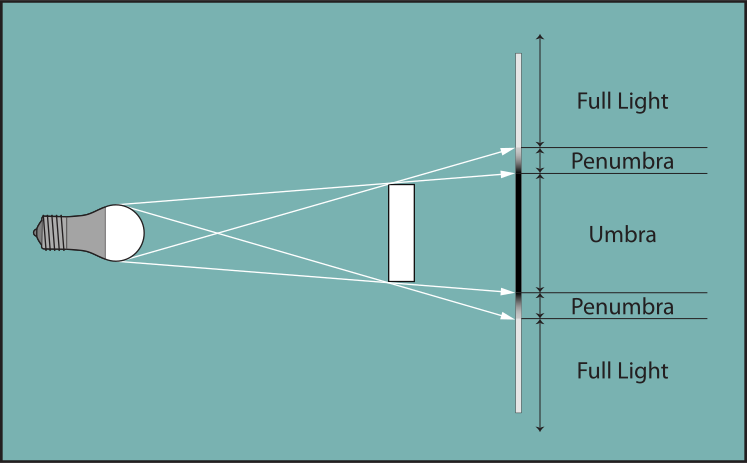
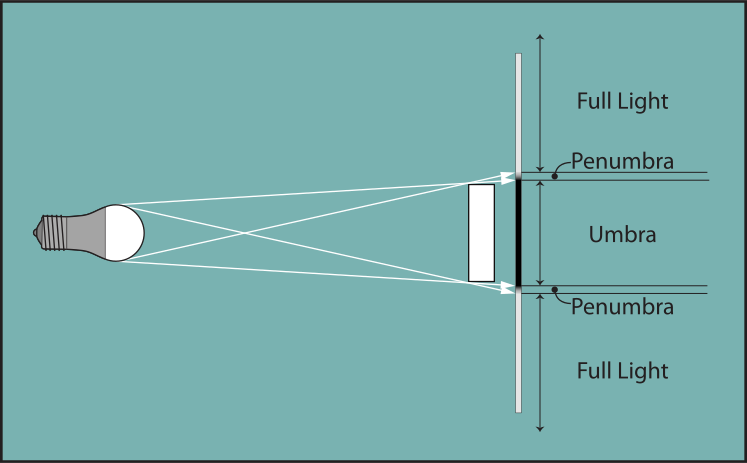
A large shadow and much larger penumbra is caused by a far object.As the object gets closer to the wall, the shadow decreases a little but the penumbra decreases faster.When the object is very close to the wall the shadow is sharp and penumbra is tiny.
Light Source Size
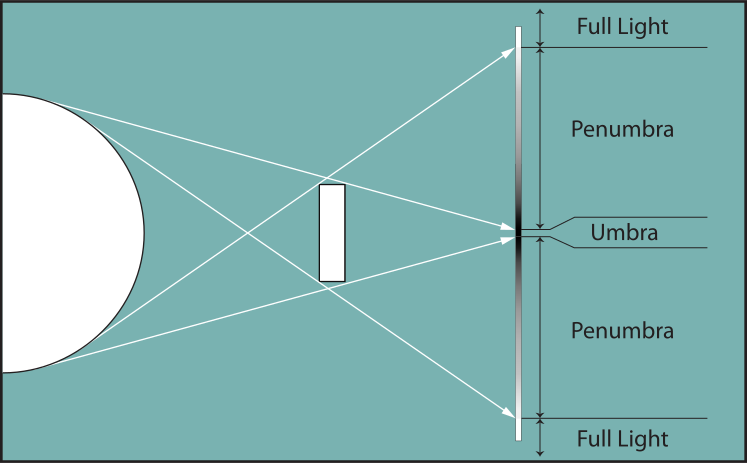
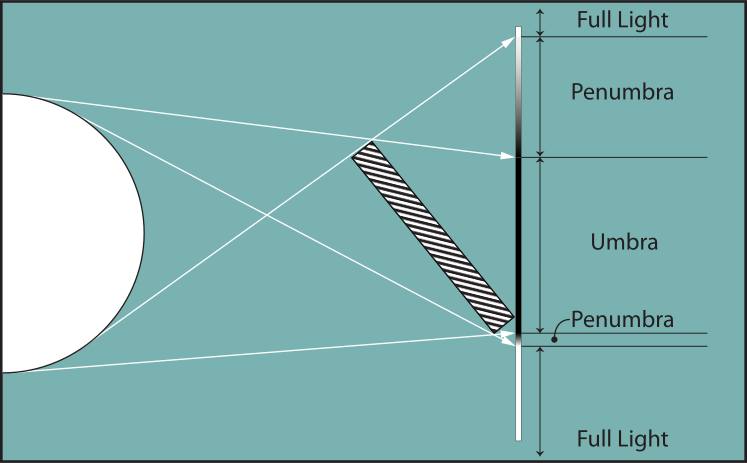
If the light source is larger than the object casting the shadow, the umbra greatly diminishes and can even dissapear entirely, and the penumbra can grow very large. If the light source is colossal, like the Sun, an object high enough up will cast no shadow at all and any penumbra may be unnoticed. The penumbra, however small, does exist, as this is extremely small light level change is the method of discovering planets going around distant stars.If the light source is very tiny in comparison to the shadow casting object, the penumbra is nearly non-existent. For the Lamp Project, finding what is called a “point light” would be necessary if extremely crisp projections or shadows are desired, such as is used in a planetarium projector to make sharp stars. The effect of a point light can be seen when you are camping and cast a giant, sharp shadow of your hand across the tent.
Tilted Object
If an object is tilted in relation to the light source and the wall, an unequal penumbra is formed. The closer portion to the wall will cast a sharp shadow, and the more distant part will be soft. As the shadow transitions from near to far, the penumbra gradually also transitions from minimum to maximum.