Parallel Twist
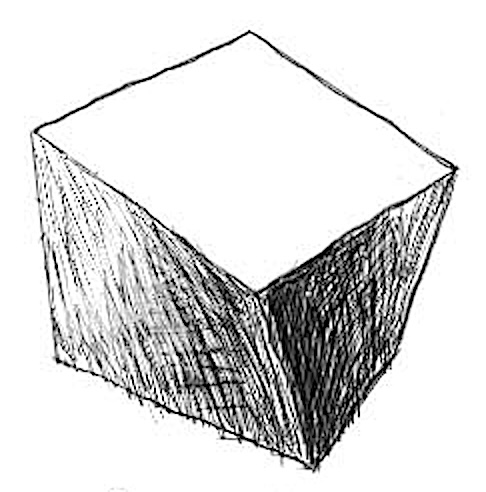
We came across this form when a student accidentally did not draw perpendicular lines in the middle band when laying out her cube pattern. The result was a beautifully twisting form that students were instantly fascinated with. In order to make the form twist, the top and bottom surfaces had to be square, while the four middle surfaces tilted to the side, forming parallelograms. At first it seemed like the form would not glue together to create a solid, but because each set of mating edges were of equal length, it did come together. The paper was under stresses, and the student had to decide, "will the surfaces bulge out, or cave in"? Both options are valid, but the results look very different.
How Much to Twist
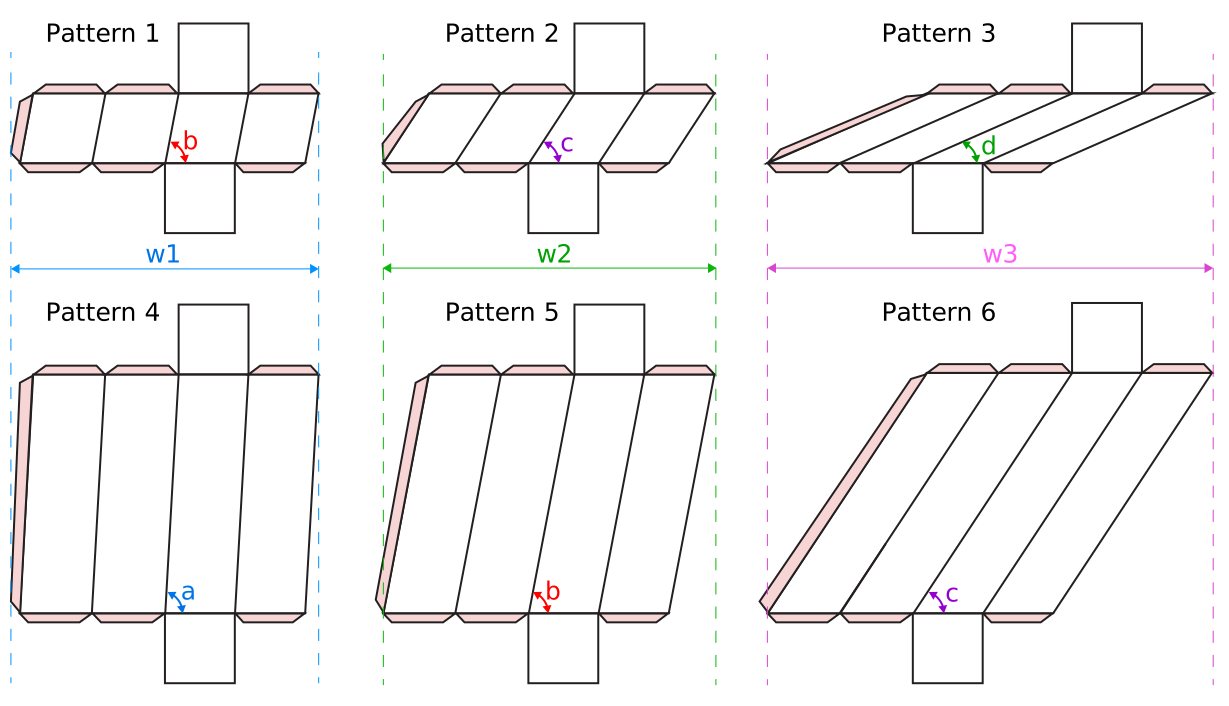
In general, a twist that is too subtle will look like a poorly made cube. A twist that is too great will be too hard to assemble because it may cause the paper to tear, collide, or pop apart. In the image, above, the three upper patterns are all the same height, but the pitch angles are different. The left angle is very subtle and the right angle is very large.
Overall, the amount of rotation has to do with both the pitch angle and the height of the sides in porportion to their width. As seen in each column, above, the same pattern width will yield different pitch angles, but the rotation amount will stay the same. the left column rotates the least, and the right colum rotates the most.
Even though the three patterns in the bottom row are the same height as one another, and are taller than their counterparts above them, they will each rotate further around than their upper counterparts because of their height. Notice that Pattern 1 and Pattern 5 have the same pitch angle, but Pattern 5 will rotate more. Likewise, the same applies to Pattern 2 and Pattern 6.
Twisting by Discrete Amounts
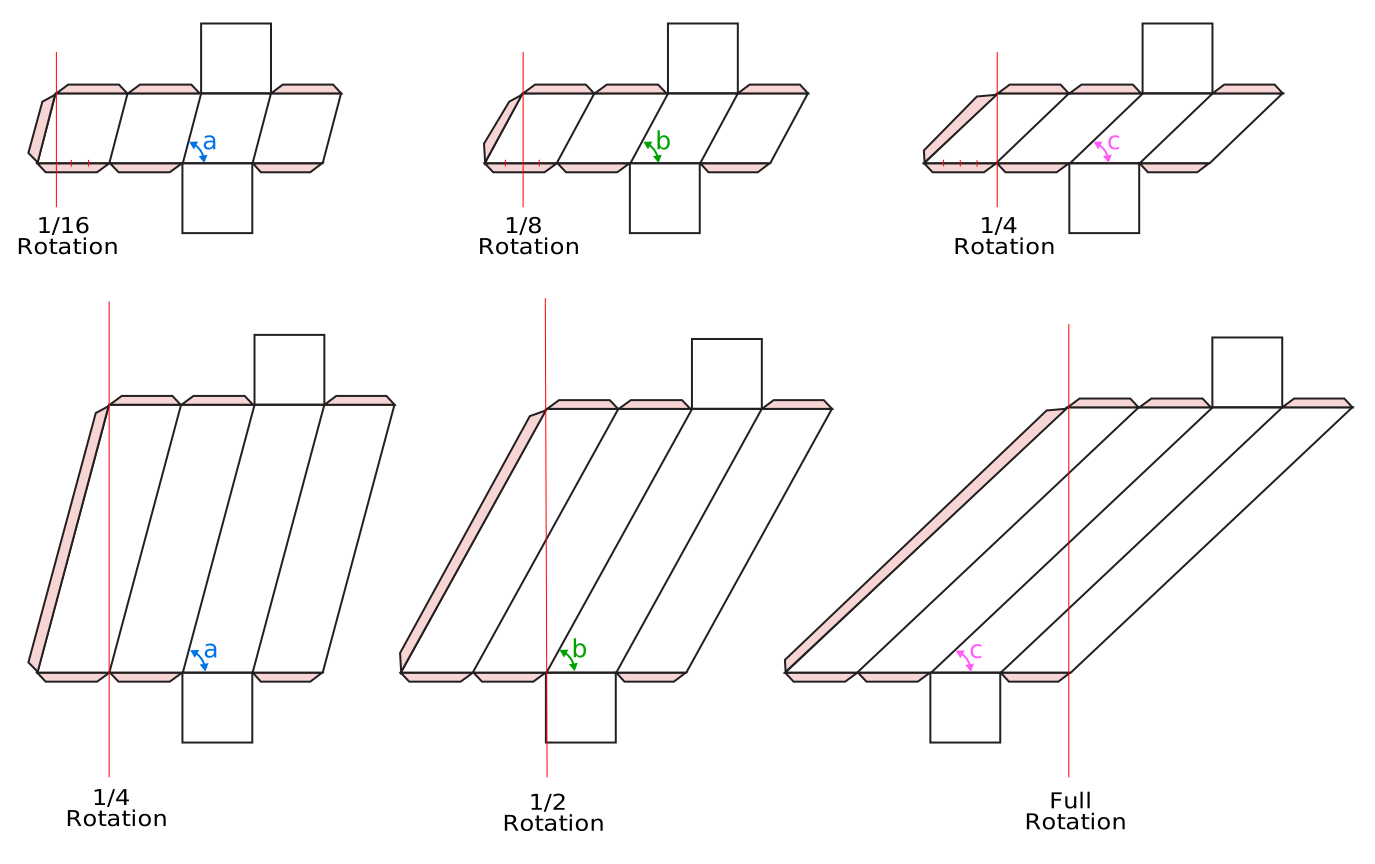
In the collection of patterns, above, the amount of twist varies by specific proportions. The top row contains variations of a twisted regular cube, and the lower row contains variations of an elongated twisted cube - or a twisted four-sided prism. All six patterns have a number indicating the amount of offset there will be in relation to the top and bottom planes, after the forms are assembled.
As indicated with the angle markings, the two patterns in the left colum both have a pitch angle of "a", the middle column has a pitch angle of "b", and the right column has a pitch angle of "c". The point being that the pitch angle and the height both makes a difference in the amount of twist.
Of special interest: the top right and bottom left patterns both twist 1/4 turn; one is because the angle is bigger and the other is because the height is taller.
Removing Stresses Through Creasing
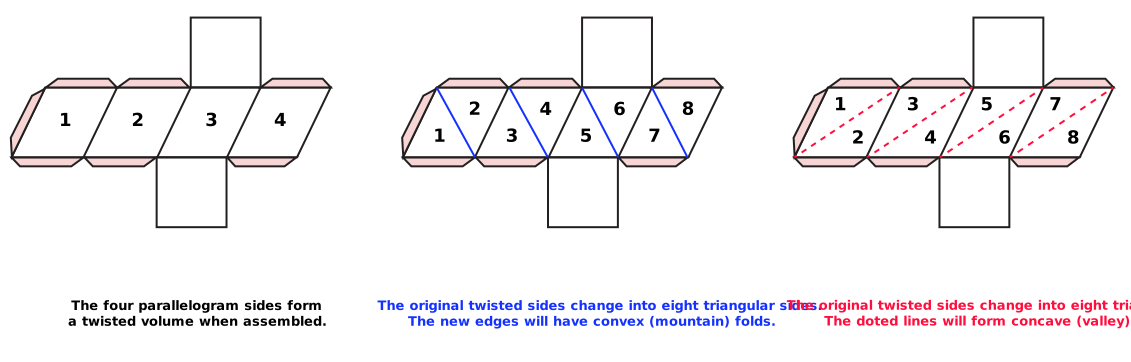
In the diagram above, the left pattern makes a twisted cube. The middle pattern transforms it into a convex volume. The right pattern transforms it into a concave volume.
