People Working on TGF
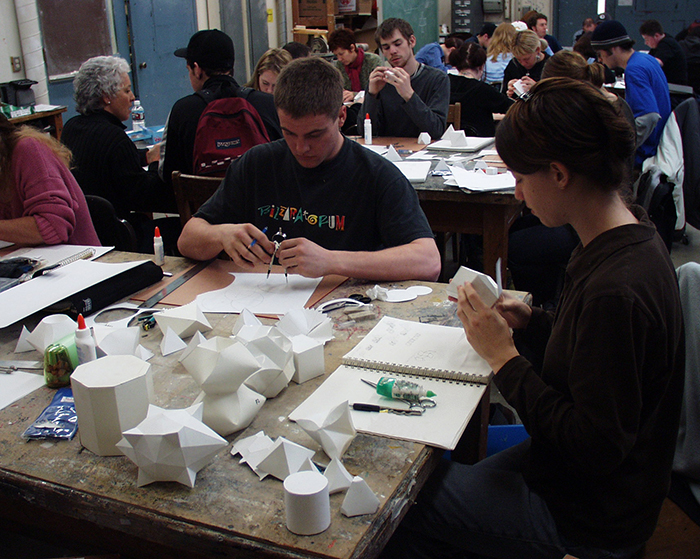
Below is a brief series of images depicting students working on various aspects of the TGF project. These are shown so you can see that many people of every age have done this project successfully. They used the same tools and processes you will.
Applying Glue
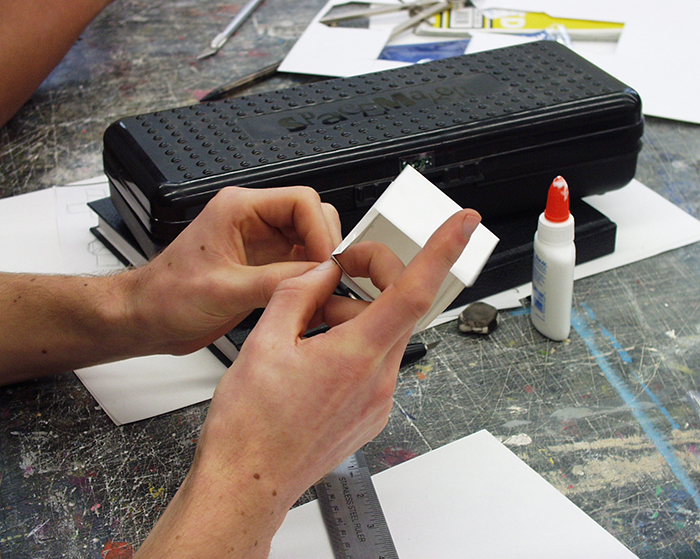
A skill very much worth acquiring is knowing how much glue to apply, how to smooth it out evenly and completely, and how much time is available for the glue to remain fluid enough to bond well. Over-applying glue will cause several possible problems: it can wrinkle the paper, squeeze out and mess up other areas of the form, and can greatly prolong bonding, drying and cure time.
Glue does not have to cure fully for it to grip well enough to move on to the next connection. That said, be mindful of the stresses you place on a glue seam before it fully cures.
The term "bond" in this case simply means that it will hold together without clamping. Glue "dries" when the liquid evaporates. It "cures" when the chemical reaction of bonding is complete, usually overnight.
Creasing with a straightedge
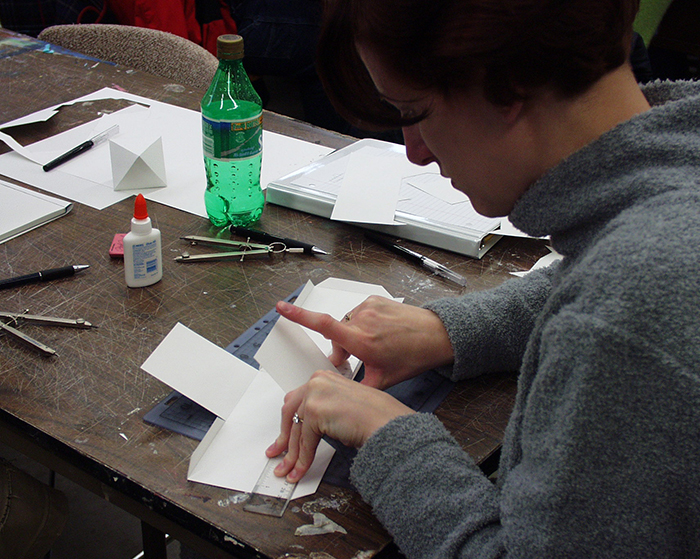
A straightedges can be used to aid in creasing paper along its seams. This can help you keep all of the parallel and coincident edges in alignment. it does have its challenges though, such as trying to lift the tabs up from the table. Also, if the straightedge gets misaligned, all seams are misaligned.
Drawing and Cutting Using a Straightedge
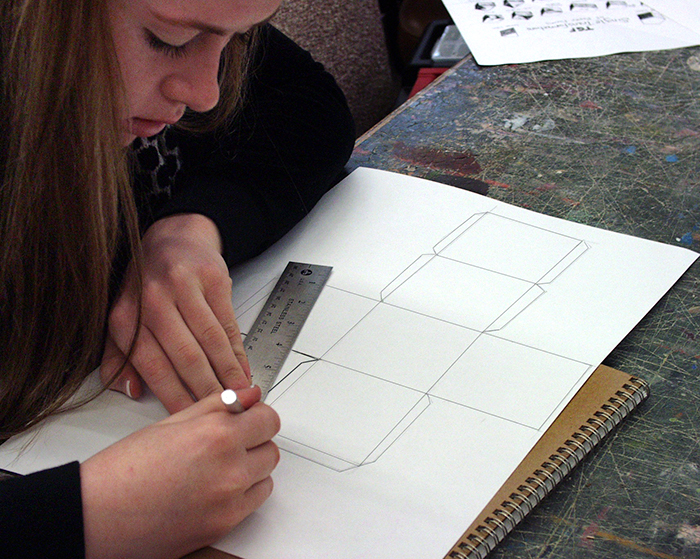
The student in the photo is using the straightedge as a guide for cutting. One recommendation though: when possible, always locate the straightedge so that it covers your pattern. If the student depicted accidentally moves the knife away from the straightedge, they will cut into the pattern. If the straightedge position was reversed, an over-cut would not damage the pattern.
Cleaning Up Your Pattern
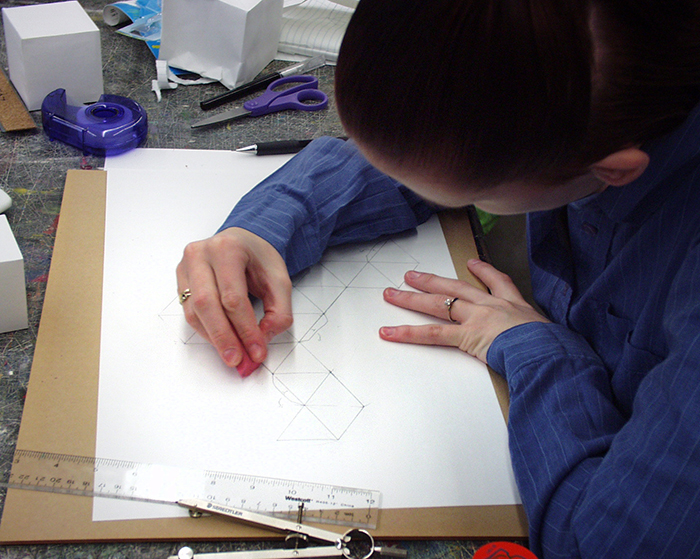
It is a lot easier to keep track of your complex designs by erasing extra marks and unnecessary construction lines . it also makes the form easier to keep tidy as it gets assembled. Wet glue on fingers spread the pencil marks all over the place.
Over-folding and Pre-folding
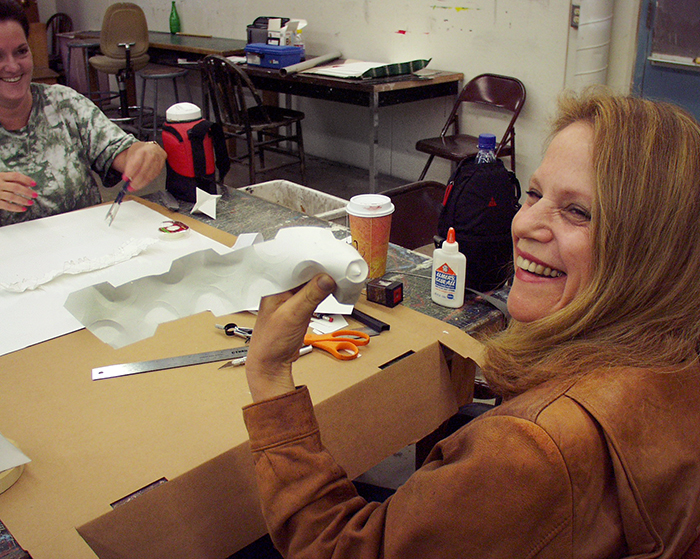
Pre-folding the pattern before gluing it together makes it easier to assemble. The piece being put together in the photo is so full of curves that the edges needed to be scored rather than simply folded. It is a good idea to over-fold every crease to its maximum before assembly so that the hinge becomes flexible. If you made a simple fold, you can fold it completely over, then reverse the fold completely in the opposite direction a few times. This doesn't work well with scored lines though; they have a tendency to start tearing.
Human Clamp
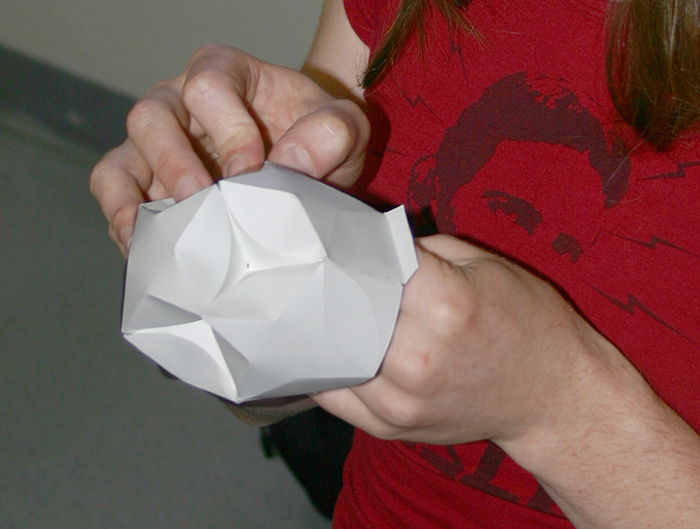
Nothing beats the dexterity of a human clamp. Holding the glued seam until it firms up makes it much more likely that your form will stay together as you continue to work.
