Scoring, Creasing and Cutting
Paper is easily torn and folded with bare hands, but if you want precision or to crease paper along a curve, there are simple tools and techniques that will aid in this endeavor.
Scoring
The process of scoring paper is to make a cut into the surface without penetrating through. The ideal depth is 1/3 of the paper thickness, but it is ridiculous to try. Shallower cuts are harder to crease along a line, and deeper cuts risk weakening the crease enough to split at the seam.
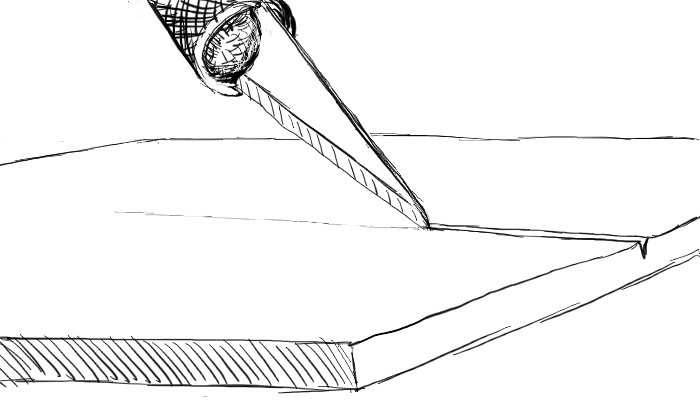 Pulling the knife at an angle is the best way to make a clean and accurate cut. The blade should have a sharp point, as this is the only part that makes a cut into the paper. It is easy to cut along a straight edge as long as your pull motion is aligned to the edge, otherwise you may either drift your cut away from the straightedge, or ride up onto it, risking a cut to your hands.
Freehand scoring is perfectly acceptable and accurate, once you develop skill through practice. Learn to follow lightly drawn lines, both straight and curved. The reason they should be drawn lightly is so that the project comes out clean.
Folding a Score
After scoring, the paper will naturally want to fold at the score line. This is true of straight and curved lines. They will fold with ease and precision.
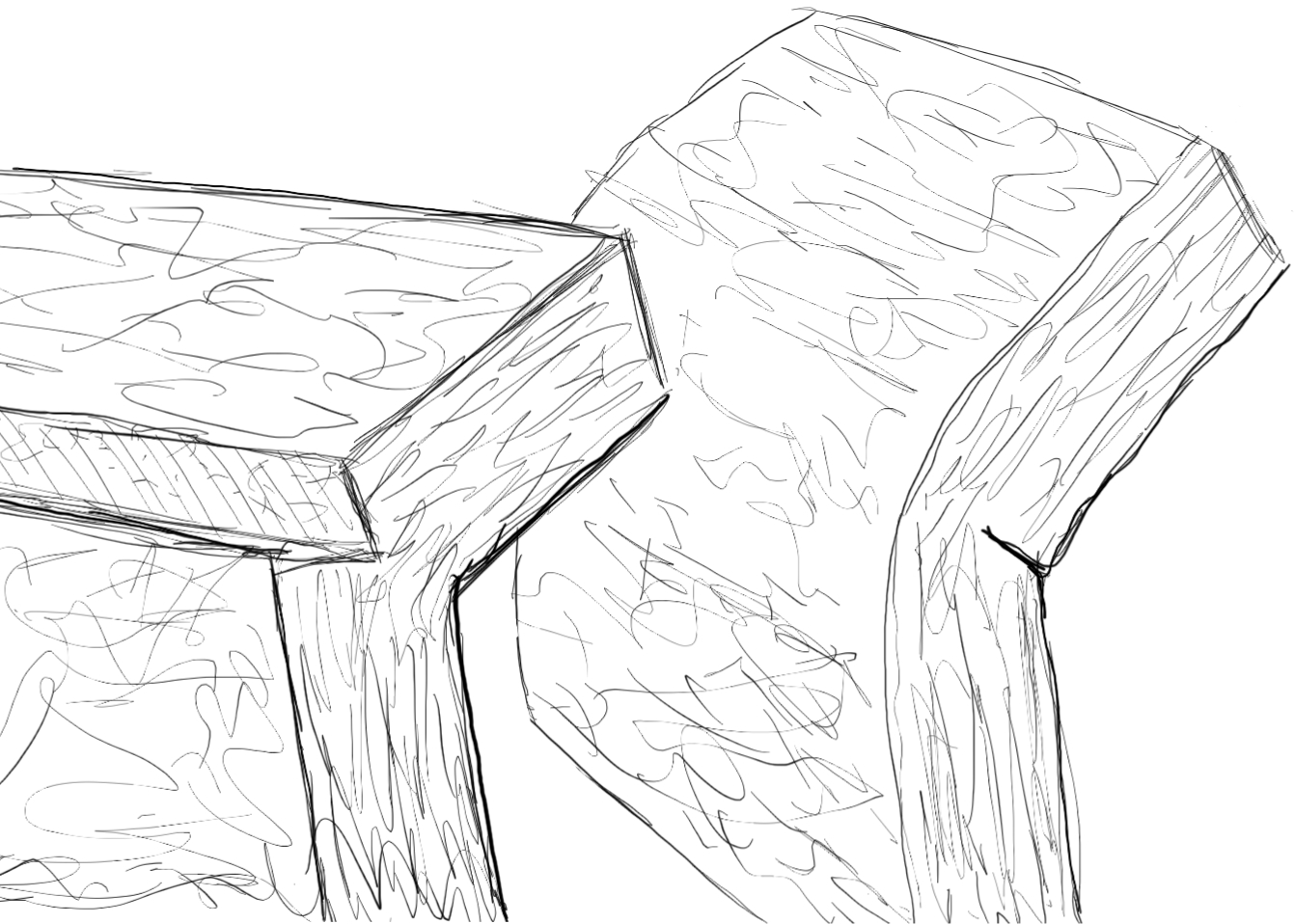
The image below illustrates how to properly fold away from the score line. As shown, the one that folds away from the score is sharp. If you try to fold towards the score line, it is essentially as though you did not score at all from a crispness point of view. The paper either pulls away, or compresses in the two examples.
Using a Bone Tool and a Paper Creasing/Embossing Board
Luxury items for a beginning student are a bone tool and a paper creasing board. They make easy work of straight and clean folds, without scoring or worn out fingertips.
The reason bone is used is because it is very hard, finely grained, and can take a nice smooth finish. It will not soften with heat friction and is very difficult to break. Other materials can be used for bone tools, such as cast acrylic, but why not use a renewable material that is environmentally sound instead?
The concept behind the tool is that it is thin and wide with softened but distinct edges. This edge compresses paper without tearing it. It works the paper fibers and makes them more flexible.
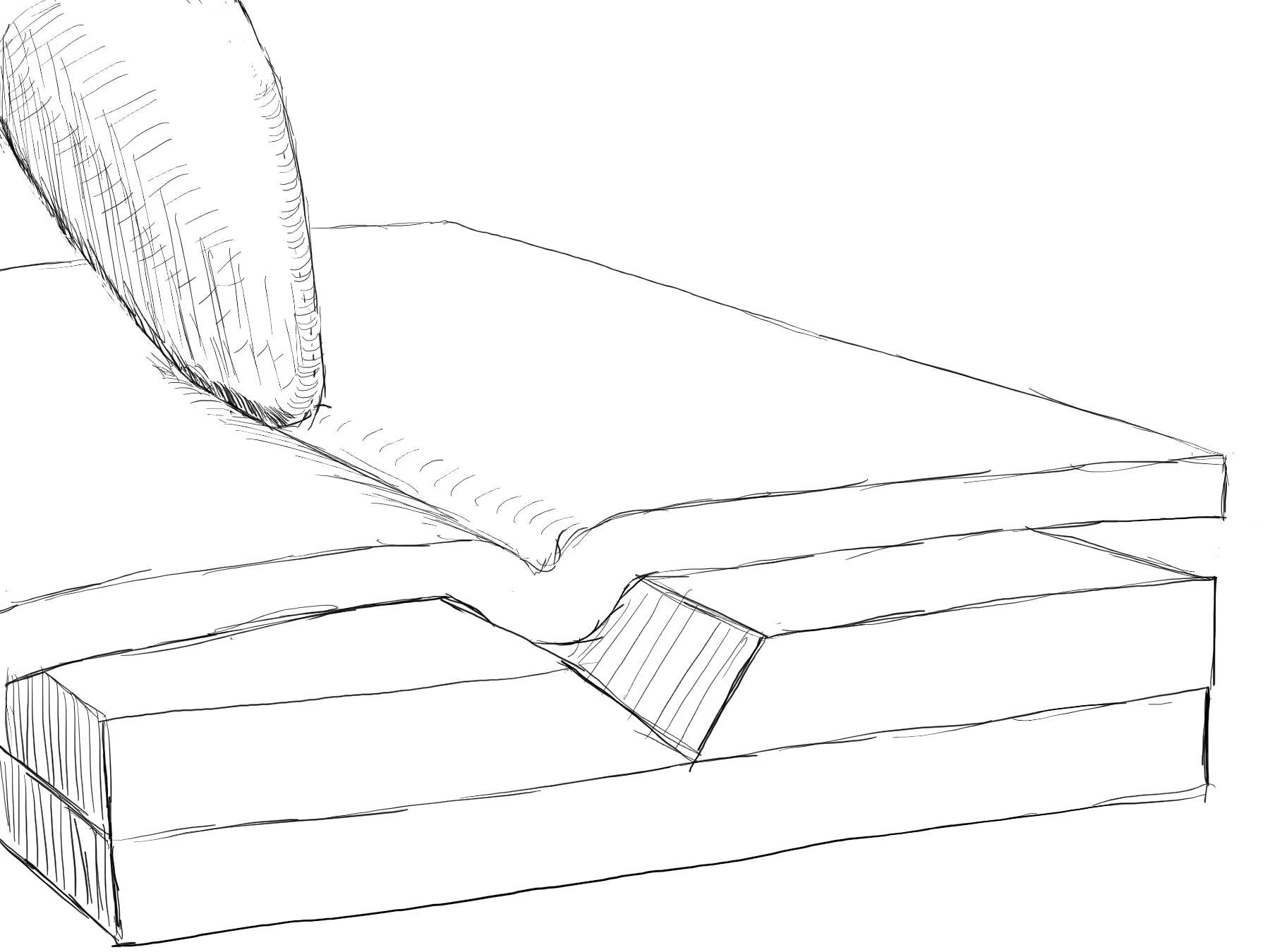
With a creasing board, the paper becomes debossed as well as compressed, making the paper fold even easier. it also directs the bone tool to run straight, unless you have a curved groove to work with. The creasing board is also called an embossing board, but embossing means raising the surface. Debossing is indenting. The debossed mark becomes embossed when it is flipped over. A hand made creasing board can be made from scrap matboard or even a piece of MDF or hardboard. There are commercial versions as well.
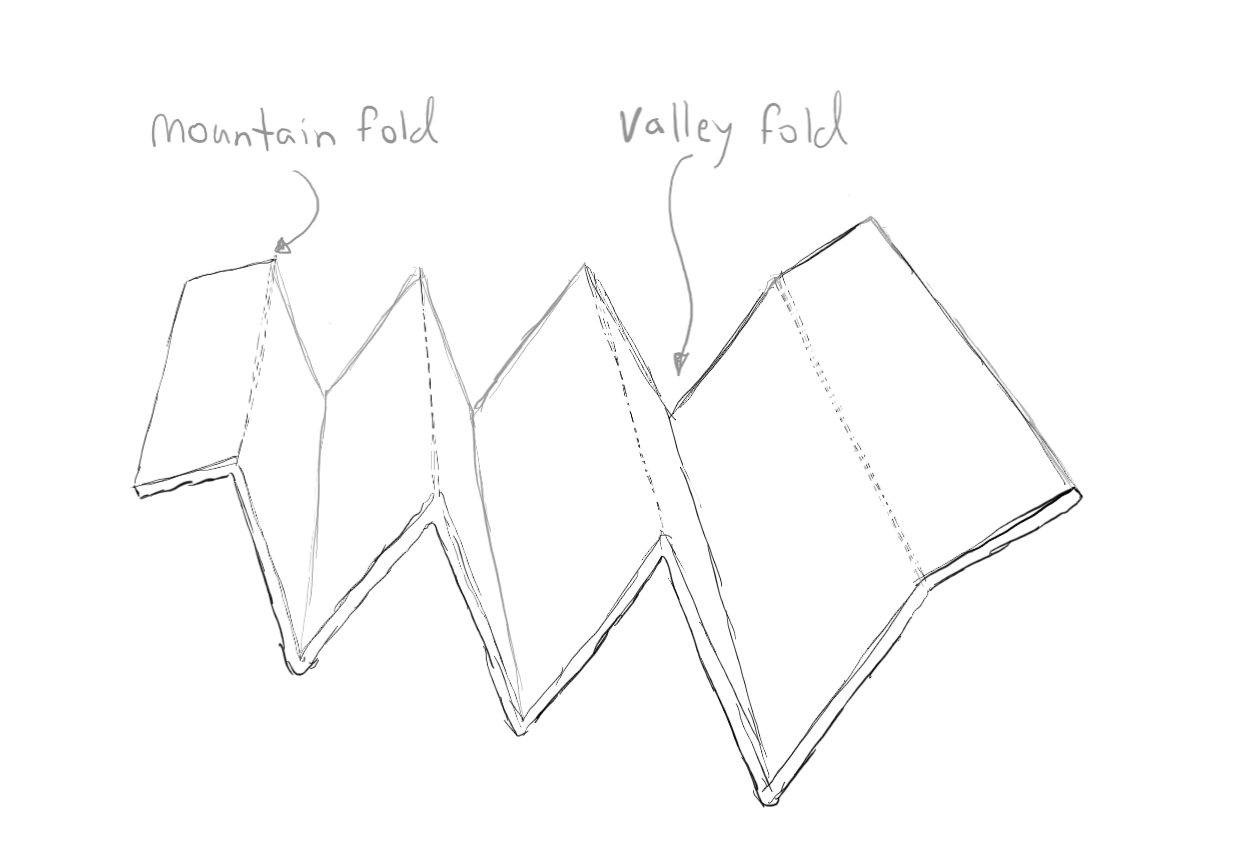
Mountain and Valley Folds
A paper fold is distinguished by whether it is concave or convex. in reality, either fold itself is an identical process, meaning every concave fold is a convex fold from the other side.
If you score the paper, it must be scored on the mountain side. If you use a bone tool, you work from the valley side. What this means is that if you need to make a valley fold via scoring, you must work from the back of the paper. The same is true if you want to make a mountain fold with a bone tool.
Folding and Scoring from the Back Side of the Paper
You may need to work your paper from the opposite side of what you drew on. This is the case when you need to score a mountain fold from the clean side of your paper. When assembling your forms, it is important to have the clean side of the paper on the outside of the form. The dirty, marked up side should become the non-visible interior of the form.
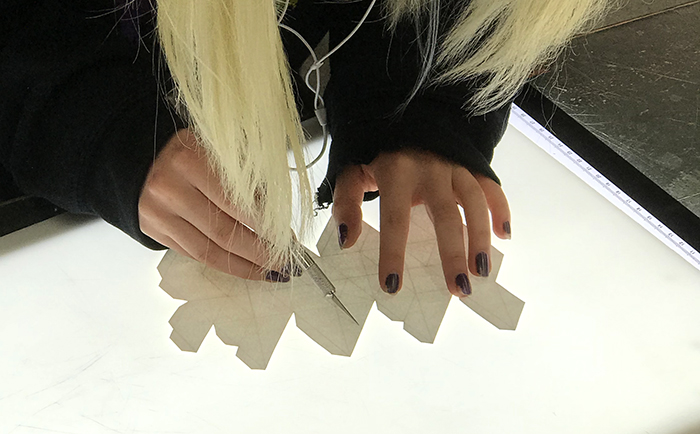
Above, a student is using a light table (which in this case is a very thin LED light panel with an acrylic surface. In order to protect the light table, another translucent or transparent plastic waste sheet is placed between the light table and the paper. This way, cuts can be made without ruining the light table.
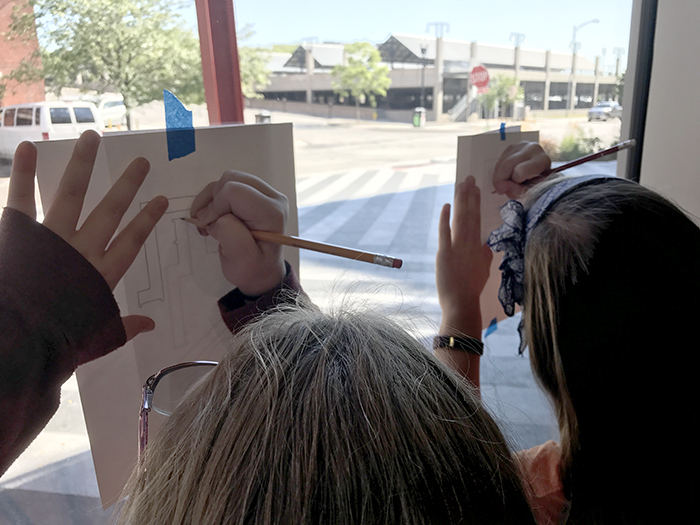
Below is a suitable, low-tech substitute for a light table; a glass window. Glass is much harder than the steel blades of a knife and will not be harmed. These kids are using the window to help them trace a pattern onto a new sheet of paper, but the tool works just as well for cutting and scoring. Cutting through the paper against glass will dull a blade because glass is so hard. If you do cut against glass, use only enough pressure to do the job. Scoring over a glass window does not damage the blade beyond normal wear and tear.
Scissors for Cutting
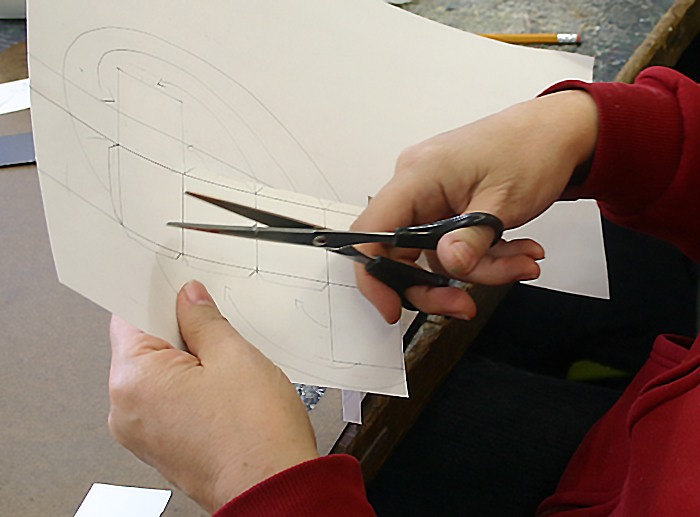
A fast and dexterous tool for cutting paper is scissors. They may be faster than a craft tool for certain cuts, or may be more difficult to use, depending on precision and the size of the pattern. It is best to have both options available so that you can choose which tool best fits your situation.
A knife makes more precise corners, and is used with a flat backing, making it a good choice for tab corners and finicky details. Scissors on the other hand are used in the air, which means you manipulate the paper and the scissors simultaneously.