Running Fence 50th Anniversary Project
(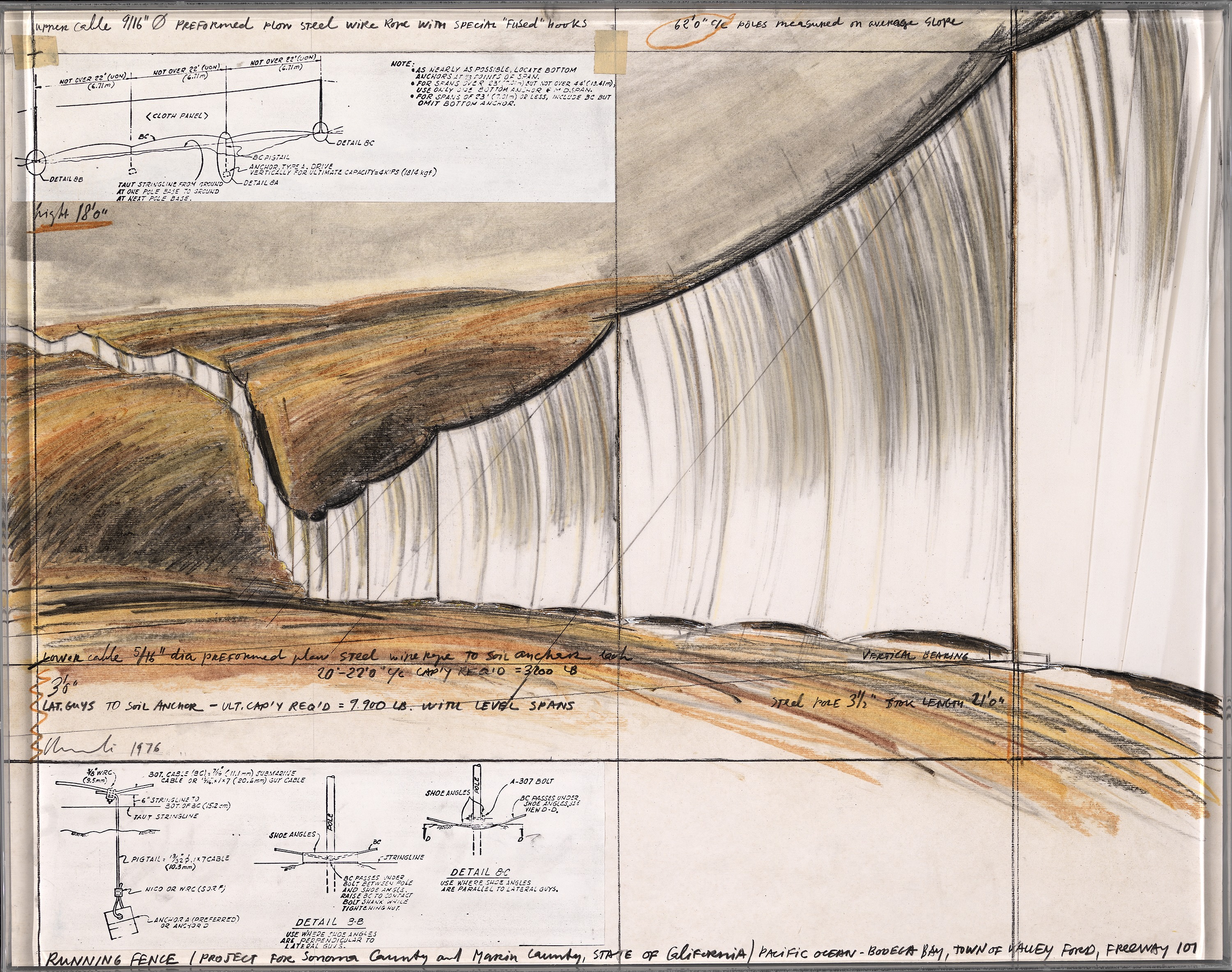
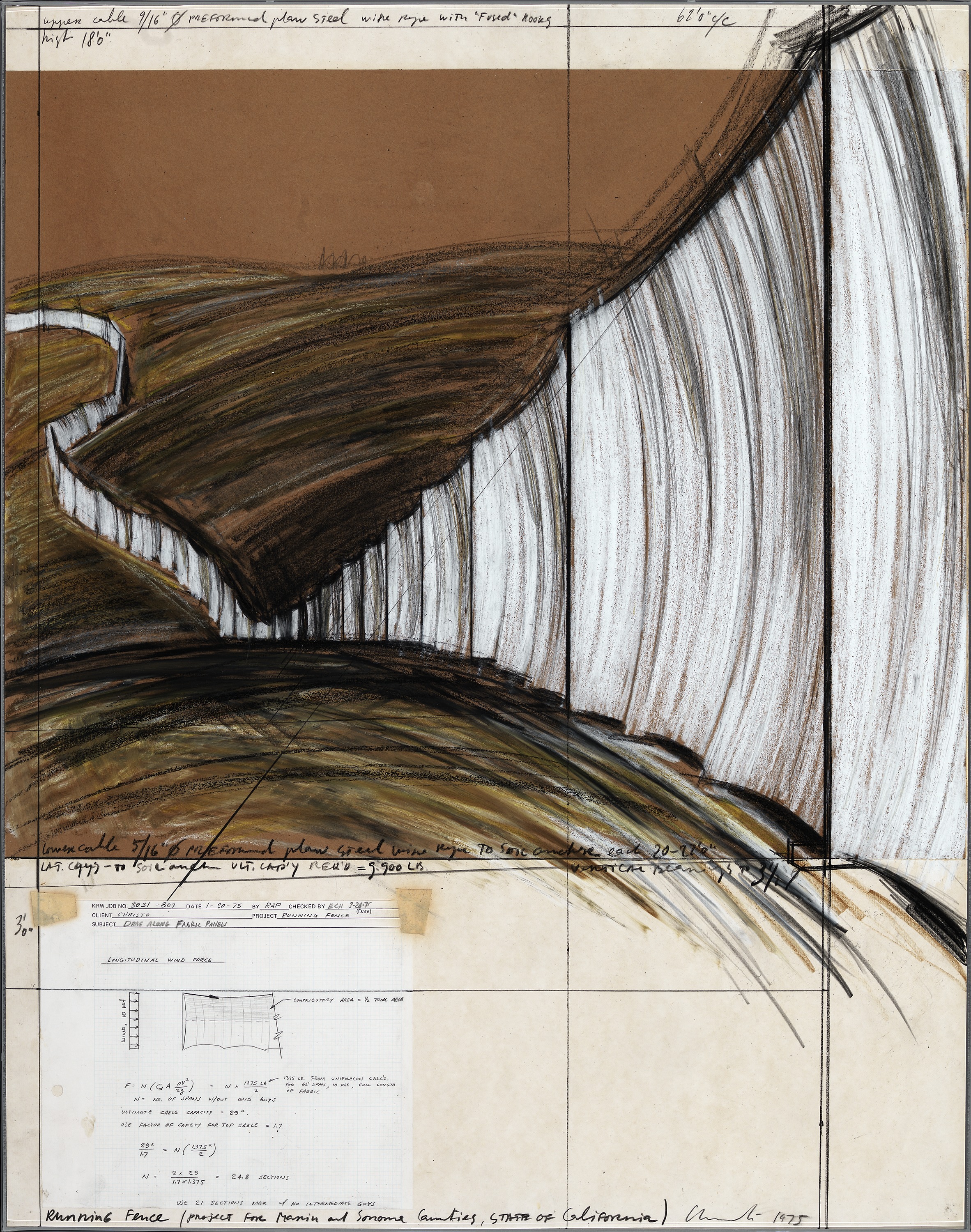
2026 is the 50th anniversary of the Cristo and Jeanne-Claude's striking RUNNING FENCE art installation. This iconic artwork ran from the northern part of Petaluma (just south of Penngrove), through 59 private ranches, and down into Bodega Bay. Planning started in 1972, and was completed in September of 1976. The project was up for 14 days, and then was dismantled. Materials used on parts of the ranch land was given to the ranch owners.
To pay for expenses Christo created and sold drawings, prints, models, and other artworks to museums and collectors. Jeanne-Claude collaborated with her husband on the creation of the installations but did not make the salable artwork. They were able to fund their projects solely though the sale of his preliminary works, as they did not seek public finding, nor did they sell the final installations. They gathered manufacturers, volunteers, and staff to do fabrication processes and physical installation. The RUNNING FENCE project had to be approved through local and state government agencies. The artists needed the cooperation of each ranch owner in order to pass through their land.
Purpose
The RUNNING FENCE project was created to highlight the nature of our coastal and rural landscape, and to make a connection from Highway 101 to the ocean. The highway connnecton was why the fence ran its length. The highway represented a link from Southern California to the Oregon border. It was important to the artists to highlight the human-made and natural aspects of the land in such a way that it was both aesthetic and connective. There was a continuum from the city of Petaluma, through the cattle lands, and into the water. The unique weather and topography of California was what attracted the artists to our area. The 14 roads that were crossed by the fence were significant in that this is where viewers could experience the work up close, and see how it related to houses, barns, ranch fencing, and hill topography. It was important to have those openings so that the fence was not a barrier, but instead a connector of communities. The transient nature of the installation was critical, as it meant that no one owned the work, not even the artists. In the words of Christo, "Unlike other artists we’re not transporting things around the world. This project is entirely designed for that specific landscape and nothing can be transported. Nobody can buy the work, nobody can own the work, and nobody can charge tickets for the work. We do not own the projects, they are beyond the ownership of the artists because freedom is the enemy of possession, that’s why these projects do not stay. They are absolutely related to artistic and aesthetic freedom."
Documentary Film
"Running Fence", Copyright 1977 Maysles Films Inc. 57 minutes long.
Links
Christo and Jeanne-Claude: On the Making of the Running Fence
Smithsonian, RUNNING FENCE image collection
Landmark Information, Permit Sonoma
Our Project
For the 50th anniversary, the City of Santa Rosa wants to partner with our sculpture class to create temporary works of art that respond to Christo's work. These pieces would be placed at various city-owned venues. The City would provide coordination and a materials budget. Meredith Knudsen, Arts and Culture Coordinator for the Planning and Economic Development department will be our go-to person.
The Sonoma County Museum has one of the largest collections of Christo-related materials and will also focus on the 50th anniversary.
