Metal Surface Treatments
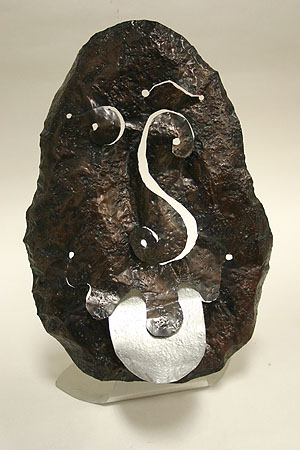
Finishes are to be discussed with the instructor, which may include distressing, texturizing, leaving the material bare, staining, or painting select small elements. This process must reflect the aesthetic quality of the piece.
Textures can be made using a variety of techniques. The simplest is to scuff or distress it with sandpaper, which can create a variety of surfaces. A chaotic crosshatch of scratches at random angles will appear dull and worn. Sanding in one direction will create a directional sense, and if the striations curve to follow the edge of the metal shape, it can create interesting sinuous effects that accentuate the line of the piece. Conversely, metal can be polished to a high shine with a great deal of time and effort. You may be required to purchase your own polishing compounds if you wish to pursue a shinier finish.
You may cold forge or cold-work the metal to raise or emboss the surface. Repoussé is a method of decorating sheet metal in which designs are hammered into the back of the metal. Special punches are used to create the designs, which form in relief (raised designs) on the surface of the metal. It is possible to make your own simple tools, such as a piece of wire bent into a particular shape to create a raised line when placed beneath a sheet of metal and hammered from the top.
Aluminum flashing is fairly hard and somewhat brittle. To increase its ductility, it needs to be annealed. This is the process of heating the metal to annealing temperature, whereby the internal stresses in the metal are eliminated, and as it cools, recrystallizes to its softest level. As the metal is worked, new stresses are introduced, causing it to become work hardened, and eventually brittle. However, re-annealing as often as necessary brings it back to dead-soft.
- Repoussé - to hammer into relief from the back side of a metal sheet, causing these areas to rise above its face on the front side.
- Chasing - to hammer into relief from the front side, causing the metal to sink below its face on the front side.
- Repoussé and Chasing are typically done against a malleable material, such as a pitch pot.
- Embossing - Stamping metal into raised relief using a die. This can also be done by rubbing the soft metal into the die from the back side with a smooth tool. A larger tool is used for broad areas, and a finer pointed tool is used to refine the edges and details. Machine embossing is a fast production method of creating relief in metal.
- Debossing - Stamping metal into depression on the metal surface. This is the reverse of embossing.
- Embossing and Debossing are also a wonderful techniques for use with paper. This may be discussed in regards to other projects such as the Pop-Up Project.
- Engraving- Metal forming relies on techniques of hammering and shaping. However, there is also a process of carving metals called “engraving” whereby a fine chisel is employed to carve away the metal surface.
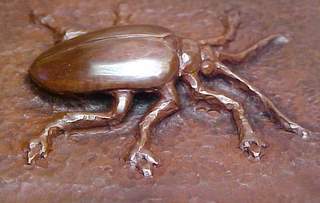
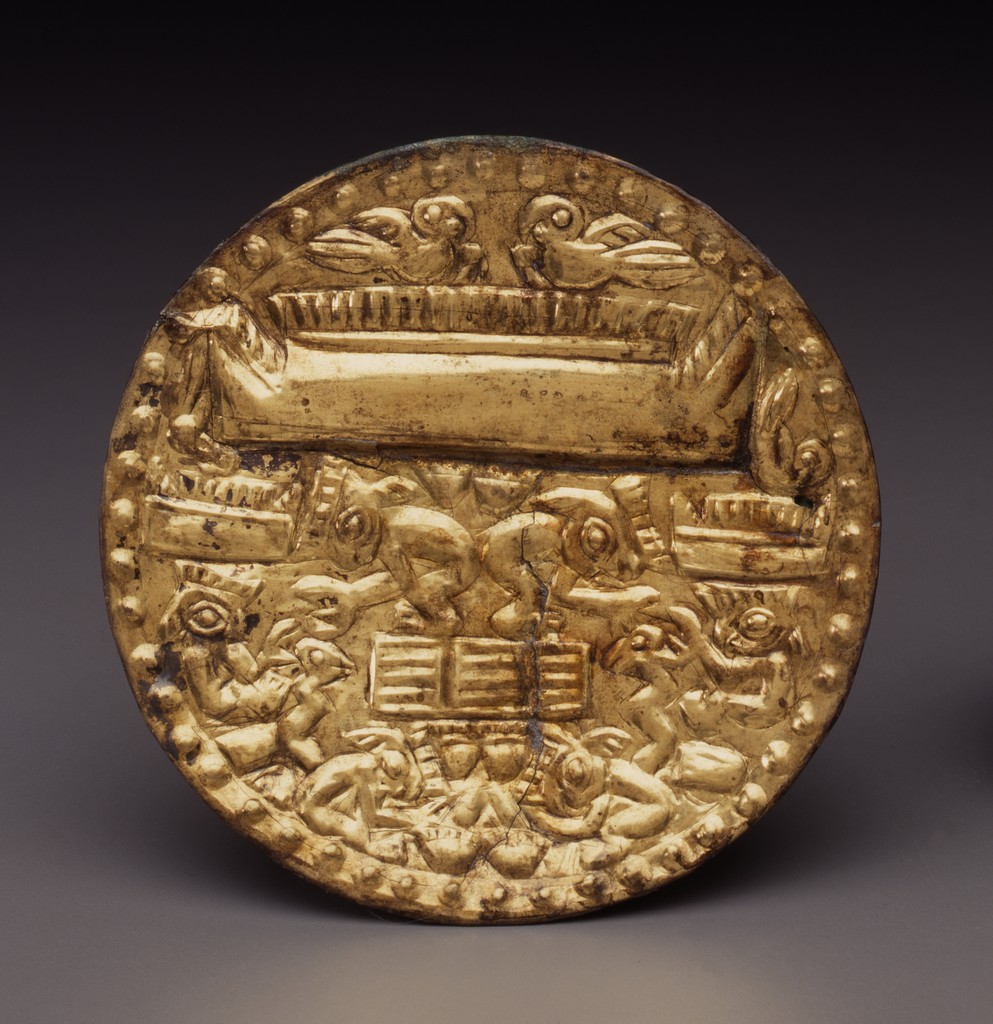
Different metals have various properties that make them more or less malleable than each other. Gold and lead are very soft, while iron and alloys like steel are significantly harder. The aluminum provided in class is a fairly safe middle ground which is light, workable, and not prone to oxidation. It likely won't achieve the same level of detail as the copper and gold examples of repoussé below, but it also does not require a forge to work with.
Paint should be used sparingly, if at all. For this project it is typically best to leave the metal bare since paint often makes the sculpture look cheap or kitschy. Barring a very specific desired outcome, you should avoid painting your piece. If you do choose to use paint, it should be used very strategically, and you must discuss it with the instructor.
