Calder Jewelry Examples
Alexander Calder started making jewelry for his wife, family, friends, and on commission as both a form of creativity, gift giving, and a desire to earn desperately needed income. He employed techniques, tools and materials that he also used in his other works. Calder did not solder, weld, or braze, so his joinery methods were all cold connections. This meant hooking, looping, hammering and riveting. His jewelry was primarily made of hammered wire. Brass was a very common material for his work because of its availability and low cost.


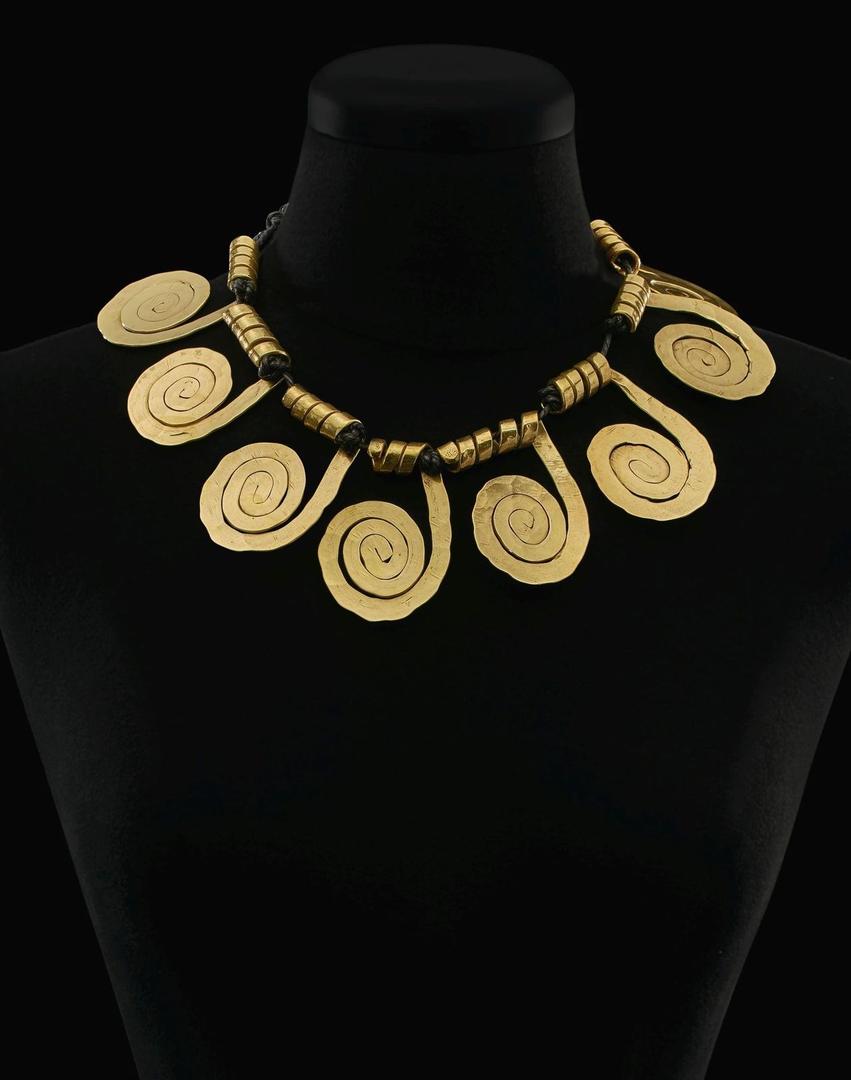
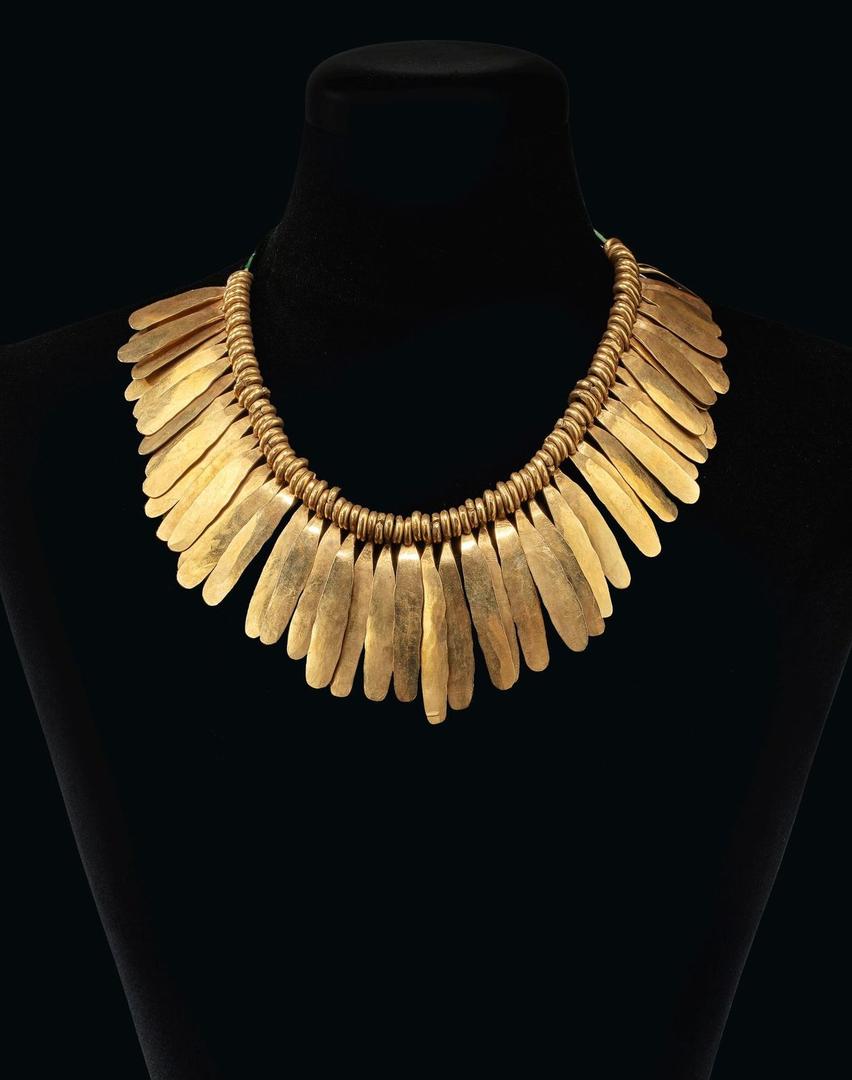
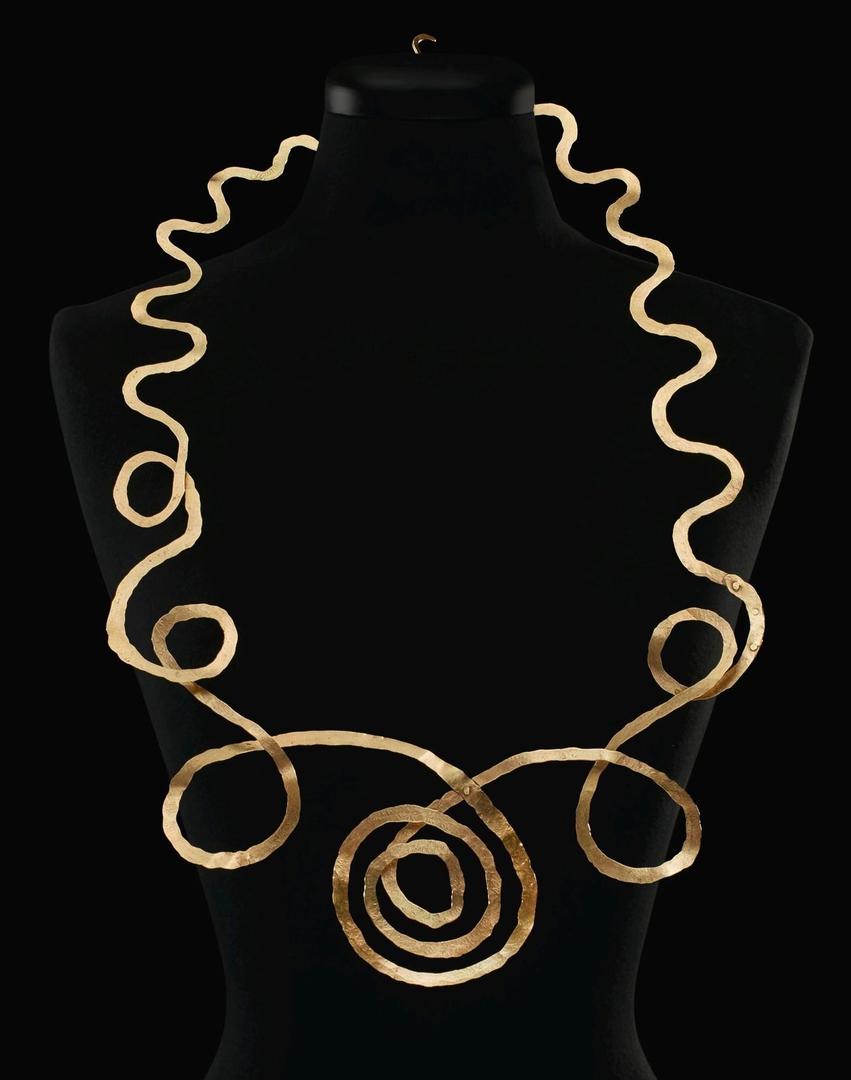
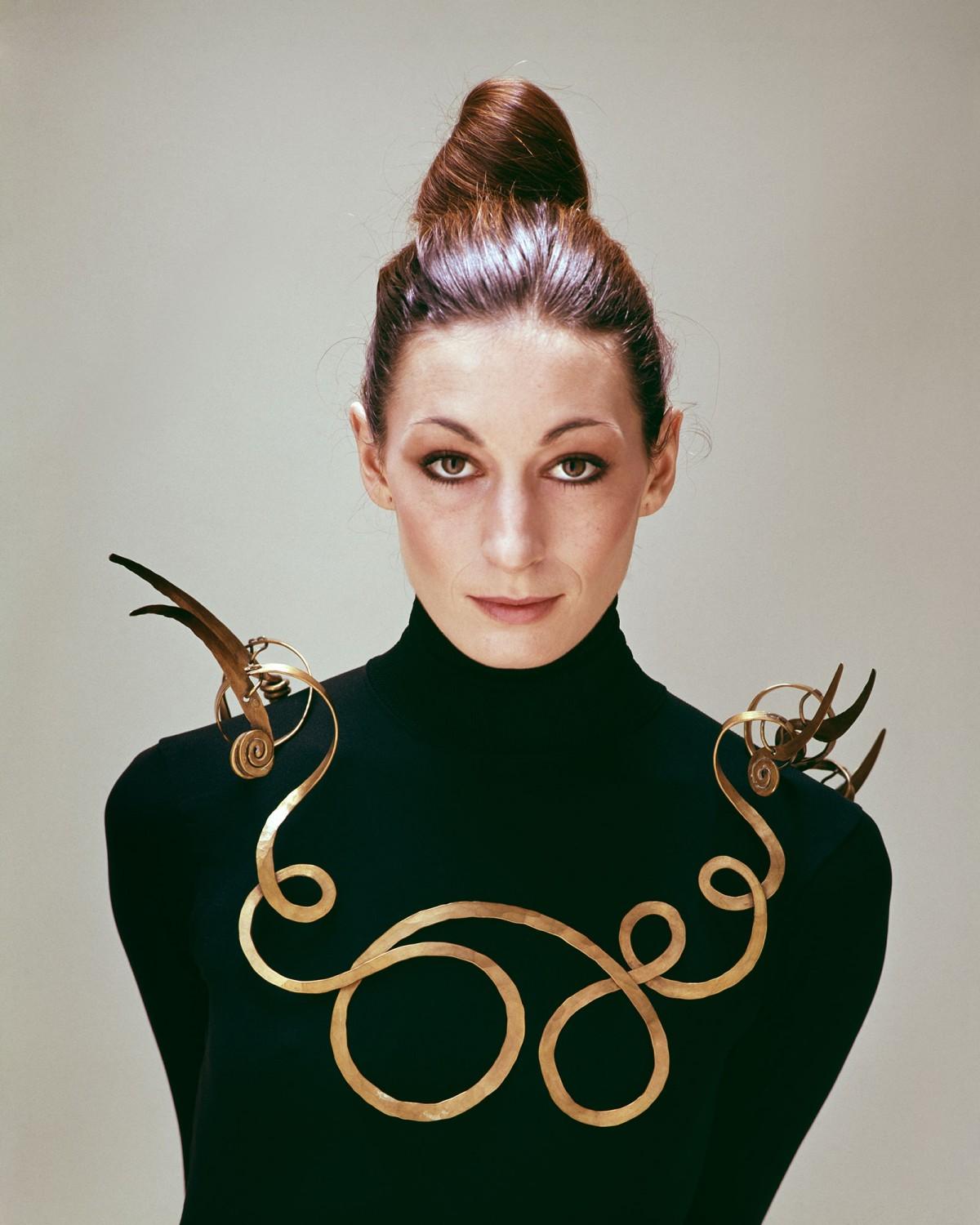
These Calder-created jewelry pieces demonstrate the common motifs in his work. Click on the above images to see them in more detail.
Hand forming was one of the key elements of Calder's jewelry. The nature of hand forming is texture and irregularity that gives the work its natural feel and warmth. They are not subtle; rather there is a statement made when the owner is seen wearing these pieces. These are not mere accents, they are artistic statements. In a way, the wearer is a canvas upon which the work is shown.
In all, he produced about 1800 pieces in his lifetime. At that quantity, if one piece was made each day, seven days a week, it would take nearly five years to complete. Yet, he also made paintings, wire sculptures, mobiles, monumental stabiles, and so many other works.
As can be seen in the images above, hammered spirals and loops were a signature form employed in Calder's pieces. These also appeared in his paintings mobiles, prints, tapestries and other works. The feather shapes seen in the second from the right was also common with his jewelry, made from hammered wire. Working with wire made it possible to produce work quickly. It is not the speed with which he could create that make these pieces special, it is the beauty of their forms and compositional relationships of the elements. They are wearable sculptures, simple, bold, and expressive. Note how black is utilized to present the works powerfully.
The mechanical aspect of the connections is evident in the second image from the left. This brooch uses a simple piece of looped wire to make the pin that affixes the piece to clothing. This method presents the connection as an aesthetic element in the work, and is not meant to be hidden.
There were many early influences in Calder's life that may have impacted his aesthetic decisions, including the Arts and Crafts movement that he experienced in his youth in Southern California, and the works of Navaho jewelry makers. But he was also heavily influenced by artists he met in Europe in his early to mid 20's, who were adopting pure abstraction in their painting and sculpture. Note that none of his pieces above are depictions of people, animals, or plants.
